Fifteen Thousand Words

I have actually found the time to write a second post this month! One of the reasons that I started this blog was to get me back into the habit of writing on a regular basis, the discipline of having to write something at least once a month for my blog gives me further incentive to continue writing my novel. It has worked. In my spare moments away from the day job I have pressed on with my book, and have now reached the milestone of fifteen thousand words. It is a key milestone to me, as I imagine this to be about a third of the way to completion.

The story has twisted and turned a great deal so far, I have rewritten characters and subplots and wrestled with both narrative and dialogue – never quite sure if I have got the tone, balance, or subtle inferences correct (let’s not even discuss grammar and syntax!). This novel started life as a playful adventure for me, I began with quite a spring in my step confident that I would reach the summit of my own literary mountain with ease. However, now I am about a third of the way in I am feeling a little out of breath, the upward gradient is becoming a lot steeper than I had expected.

Time has also been ‘wasted’ (other writers will rebuke me for saying that!) by retracing my steps – a necessary precaution to make sure I have taken the correct path with the storyline, and that those little detours along the way were merely distractions and not glaring opportunities to develop the plot in a better way. I know my characters well now, I can talk to them, even be them, when I am writing, though some are still to show their true colours. I have had a real fight with myself over a key part of the plot, which requires the reader and one of the main characters, to suspend disbelief in the improbable and impossible and take something at face value on the evidence staring them right in the face. I’ve negotiated that hurdle, and as I’ve landed on the other side on my lead foot I have accelerated away.

There is still a good way to go, but I am encouraged that this time I have not given up, the finished article is some way off but it is much closer than I could have hoped for after just a few months writing. The climbing and running analogies I’ve used are no accident, as I see the writing process, the creation of a story, development of ideas and characters, very much as an expedition, with different terrains to navigate. At times it feels like a race – a race to get all of the ideas in some semblance of order onto paper, and a race to move the story forward. The next blog post on this topic may well be after Christmas, when I hope to have reached thirty thousand words – about two-thirds of the way to completion. I would love to hear from other writers about how they cope with the daily challenge of trying to write something meaningful.

Image acknowledgment: The Power of Words by Antonio Litterio.

Image acknowledgment: The Power of Words by Antonio Litterio.

Shooting Stars

I have struggled to write something for this month’s blog entry. Not because I have nothing to write about, but because everything I have started to write has ended up being some self-indulgent waffle. I started to write about ‘change’, because change is happening all around me right now: after years of hard study, my son has just started University; my daughter has landed a lead role in her senior school production; my sister is embarking on an exciting new venture as an artist, and a good friend was recently ordained. I was going to write that ‘change is a good thing’; ‘we should embrace change’; ‘change is exciting’. I was going to write that ‘sometimes when lots of change is going on around us we can feel like a stationary object with shooting stars of change coming at us from all directions, and we just have a moment to see them before they pass us by.’

Then I realised where all this was coming from. My own pace of change has slowed considerably. I was recently approached by two headhunters for senior roles in my industry, and I turned them down flat. Ten years ago, even five years ago, I would have ruthlessly followed up. In my field of expertise it is not unusual to change jobs every few years, from the age of late 20’s until early 40’s the average tenure is probably something in the region of three years. My own average since I was 28 (excluding two periods of freelance work) is two years and four months, and as I have now been with my current employer for more than three years typically I should be looking for my next move. But I am not. For the first time in a long time, I don’t want to move. I enjoy my job, have an enviable work/life balance, a boss who gives me complete autonomy (but is there when I need him), and a loyal hard-working team that I have built and developed.

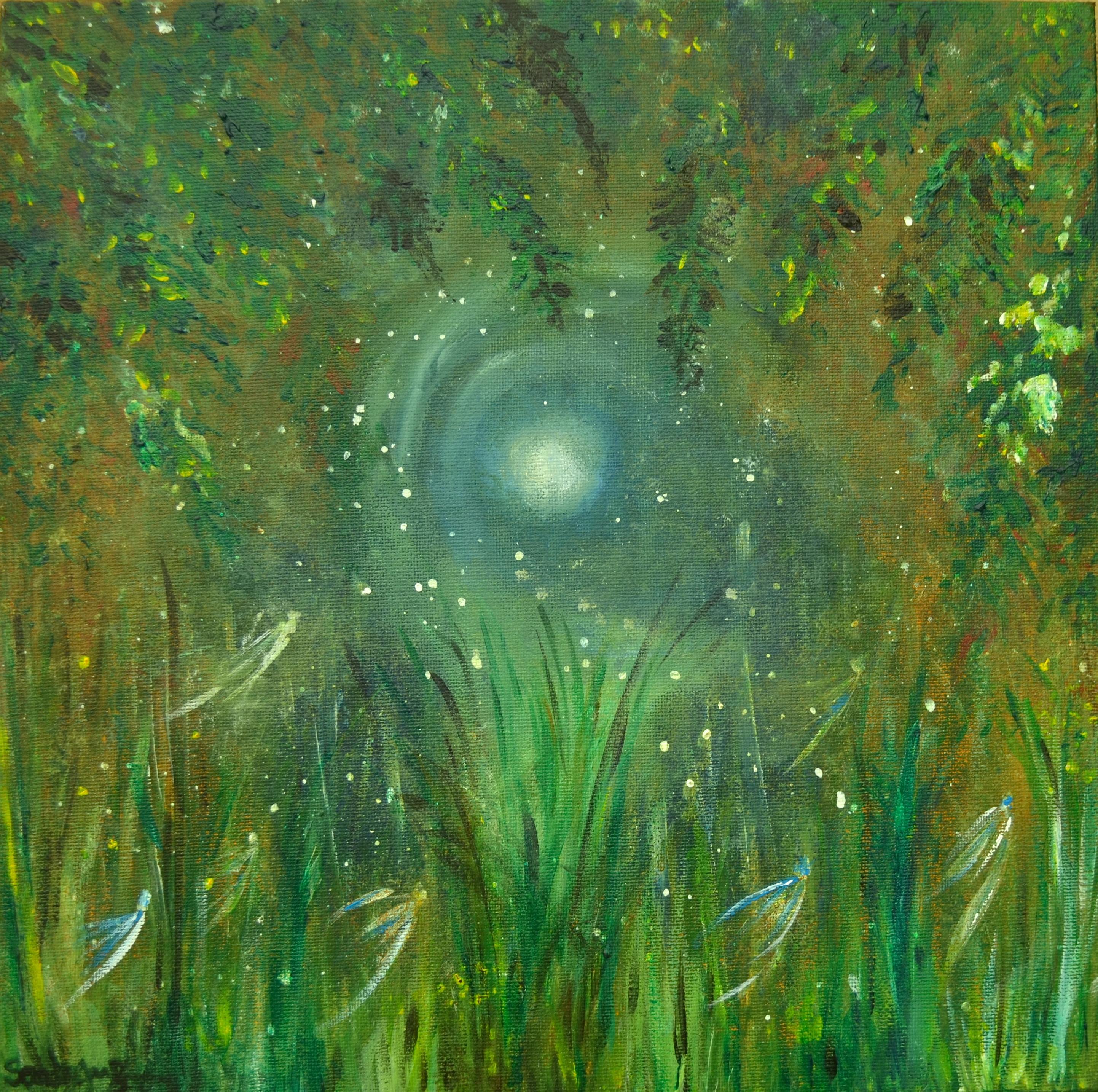
So why am I feeling like I am surrounded by shooting stars? It is because I am. All of those I mentioned earlier are taking their opportunities and making the most of them, they are moving at a much faster pace than I am. That’s how it should be. We cannot all be in a constant state of rapid change – we’d go crazy if there were not things or people that we could rely on, or if our own lives didn’t stay relatively stationary for long enough for us to decide what we wanted, or to recognise a new opportunity when it arises. But human beings, on the whole, are progressive creatures by nature; we crave new things, new experiences, and new challenges. But we are also creatures that can appreciate what goes on around us, whether that is art, theatre, literature, sport, music, the natural world, or technology advances in areas such as science & medicine. We can also appreciate the beauty of change in others. I listened to my son, offering a little advice when needed,  as he carefully chose which university he wanted to go to, and what course to study, and then watched him apply himself to his studies, achieve his grades and get where he wanted to be, I’ve watched  as my daughter has continued to expand her creative horizons and will now be one of the youngest leads ever in her senior school play, I’ve seen how amazingly creative my sister is (the illustration on this page is one of her paintings), and I’ve watched from a distance as my lovely friend Wendy was ordained into the priesthood, after agonising over her calling. All that time I have had the advantage of being relatively stationary – I’ve been the constant this time. As a result I have a completely different perspective than these shooting stars and, if I watch closely and carefully enough, I can see them approaching, their lights growing ever brighter, and when they come close to me they are dazzling, but unlike celestial shooting stars, they are not gone in an instant and fade to nothing, if I choose to I can hold them for as long as I like in my gaze as they approach, and watch them grow bigger, brighter and more brilliant.

It is a true privilege to be standing relatively still while I take in all this change. It is also a lesson in not being too hungry for change all the time.  No doubt my time for change will come again and hopefully I will be someone else’s shooting star. But, right now, I am more than content to gaze upon those stars around me.

.

DSC_2686_GreenShift_Sharpened_croppedInside

This painting by my sister, Sandra Brown, painted without my knowledge as I wrote this blog, perfectly visualises holding a star in my minds eye and watching it grow.

Shopping Centre Herd

Meeting, greeting
Looking for seating,
No place to stop
Ready to drop

Moping, sloping
Shopping and hoping
Kids in tow
Where’s left to go?

Look down to text
Where to next?
Don’t know why there’s no reply
Call on the phone, can’t we go home?

Term starts tomorrow
It’s spend and borrow,
The latest kit
Or the kids won’t fit

Teenagers in groups
The fashion troops,
Brainwashed by brands
Cash in their hands

Pensioners gaze
Crowds are a maze
Need some quiet
Nowhere to find it

A place to eat, wait for a seat
Time to rest, out of the heat
Overheard words:
“We’re all part of the herd”

Context: Composed after “people watching” (and listening) in the Grand Arcade, Cambridge, UK, the day before the school term resumes.

The Spaghetti Challenge

Imagine for a moment that you live in a part if the world that is desperately short of a natural resource essential for life. Let’s say that was spaghetti, and that spaghetti was a naturally occurring life sustaining substance.

You need spaghetti in order to sustain your life, you can’t go much more than a few hours without it. Spaghetti deprivation will ultimately lead to death. But you don’t only need it to sustain you, you need it for hygiene – you wash with spaghetti, clean your clothes with spaghetti, you nourish your crops with spaghetti, your farmed animals also need spaghetti just as you do.

Some parts of the world have spaghetti in abundance, and don’t use it carefully, they have so much they can waste it. Spaghetti is difficult to transport so you can’t very easily buy their excess. In any case because you have very little spaghetti it has affected your economy to such an extent that you couldn’t afford to buy it even if it could be shipped in sufficient quantities.

In some countries they have spaghetti piped to their houses. In your country you have to walk miles to gather enough spaghetti just for one day. Sometimes the spaghetti you gather isn’t very clean, you don’t have any method of cleaning it, so because you need it so badly you still consume it. Sometimes when you consume dirty spaghetti it has disease carrying organisms in it, some people (especially babies and young children) can get very sick from these and even die.

Some people do try and help – there are groups like SpaghettiAid who help poorer, spaghetti deprived countries, use technologies to make sure the spaghetti they do have is clean enough to consume. But they also help to find more spaghetti. Underground there are spaghetti sources, but these are difficult to reach without the proper equipment, and because you and your country are poor you can’t afford to buy the expensive drilling machines. These organisations raise funds for spaghetti drilling equipment. Once found a spaghetti well can transform your community. The kids and mothers, whose job it usually is, don’t have to walk miles to collect the daily spaghetti, so the kids have time to be schooled and the mothers have time to nurse and to prepare food for the family. Your kids have enough spaghetti to keep them healthy, so they can pay attention in school and grow up with a better education which, in turn, will help the community to prosper. People now have enough spaghetti to keep themselves clean, the resulting rapid improvement in health means that diseases that are spaghetti borne virtually disappear. Your crops flourish as they are regularly irrigated with spaghetti. Your animals are healthy as they have enough spaghetti, so your community has a better, more reliable, food resource.

Now imagine your community has gone from spaghetti starved, to relative spaghetti abundance, but you still have to use it carefully as you don’t have a surplus, so you don’t waste any spaghetti at all. How would you regard others in countries with an abundance of spaghetti who use it wastefully? What if the media, especially social media on the internet was showing people wasting spaghetti every day by pouring large chilled or frozen quantities over themselves and leaving it to drain needlessly away? What If the reason for this very public wastefulness was to raise awareness and funds for research into a life threatening disease? What if this wastefulness was even being endorsed by celebrity figures? Could you accept the wastage because of the cause? Would you see the wastage as unnecessary and insensitive given that awareness can be raised without throwing away such a valuable natural resource? Could more of the participants have factored in spaghetti waste saving to their stunts?
                                                                                                                    Please re-read this article and with every mention of spaghetti please replace it with the word “WATER”.


Facts about water deprivation


More than a billion people do not have access to safe water

Well over 2 billion people live without adequate sanitation

At any given time, more than half of the developing world’s population is suffering from one or more of the main diseases associated with unsafe water and poor sanitation.
For children, the chances of survival dwindle in the absence of these essentials.

Every day, 6,000 children die of water-related diseases.

Young children are the first to get sick and die from waterborne and sanitation-related illnesses—including diarrhoeal diseases and malaria.

(Sources: UNICEF and WaterAid.org)

Facts about ALS
/MND

ALS stands for Amyotrophic Lateral Sclerosis, it is another name for Motor Neurone Disease (MND) – a disease that affects nerve cells in the brain and spinal cord. ALS causes the brain to be unable to initiate and control muscle movement. It is largely irreversible and can lead to total paralysis.

ALS incidence and prevalence figures vary according to source, but it is estimated that prevalence (how many people are suffering with ALS at any one time) affects around 6 per 100,000 people that is 0.006% of the population.

The average age of onset is in the mid-50s

Life expectancy post diagnosis is 2-5 years

Most sufferers die from respiratory failure

The symptoms of numbing paralysis are said to be similar to the numbing feeling caused by being immersed in freezing cold water or ice. Hence the ice bucket challenge.

(Sources: http://www.ALS.org, Neuroepidemiology 2013;41 (2): 118-30 – Chilo et al, FAST FACTS: ALS and the ice bucket challenge, Reynaldo Santo Jr at http://www.rappler.com)

WaterAid

WaterAid.org has also got in on the Ice Bucket Challenge act, they call it “cold water tipping” – but they provide the following advice:
                                                                                                               

“Worried about the water? You can make sure you don’t waste a drop by taking on the challenge in your garden (giving the plants a good watering as you go), in your local lido or swimming pool, or even in your pond…”


Disclaimer: this article is not intended to belittle the suffering of those with ALS, nor to detract from the need for research. It does not seek to discourage people from donating to ALS research or to any other disease research for that matter. It is however intended to be thought provoking in providing a global social context to a resource that many of us take for granted, but so many have poor access to. All facts and figures are researched using trusted sources, but I am not responsible for any errors.
Touching lives: the ripple effect

Once in a while we meet someone who not only touches our own life, but the lives of many, with immeasurably positive outcomes. Immeasurable just because of the sheer number of people that they have influenced. Extravagant actions, self promotion and high profile recognition are totally foreign to this person.

This is the person who we miss most when they are not there any more; who we might take for granted and only realise just how important they are to us when they are no longer in our lives. This individual see’s beyond their own day to day worries, they put their own needs aside when others’ needs are more urgent. And they listen.

This is the person who can organise, who encourages, persuades and gently cajoles. This is the person who coaxes others out of a bad place, who arbitrates in times of discord, who see’s the positive in all situations and the best in all people. And they will always remember you.

Often an unsung hero or heroine, they may not hit the headlines with raising funds for deserving charities, they may not be the one-time absailing or parachuting fundraisers, but if they have a cause it will be a long term commitment that they will support through thick and thin.

Surrogate mum or dad for those away from home for the first time, surrogate big sister or brother for those who have no family but need support in the way that a sibling might provide it. A deep sense of empathy and sympathy defines them, their good humoured nature a cover for their deep emotional intelligence. But above all this is a practical person – hands-on helper, supporter, fixer and enabler. None of their support and advice will ever allow the supportee to wallow in self pity for too long. They will pick you up, but more importantly they will know how to encourage you to pick yourself up. They will know how to focus and refocus you. And that is because they will really know you – because you have trustingly let them get close – your trust is never betrayed.

This person may have set you on your career path, because they believed in you, saw your potential when others did not, they may have pushed you to explore and to extend yourself beyond your own perception of your capabilities. They will have seen something in you that maybe even you did not immediately recognise.

This is a person who we never can, or ever will, forget. The happy memories will be long lasting. They endure over time, their presence and influence still keenly felt long after they have gone. Their absence may not be permanent, there may be reunions to look forward to, and those occasions are joyful ones that are filled with feelings of “picking up where we left off” irrespective of the amount of time that has passed. When the absence is a permanent loss, the inevitable feeling of sadness will eventually give way to fond memories, flashbacks to shared experiences, recollections of parties and fun days, lazy days in the pub, raucous nights in the clubs, and sore heads after partying too hard – but above all there will be laughter. There will always be laughter. The laughter may give way to tears – and those tears will be joyous and sadness combined in equal measure. And just as the laughter and tears between you in life were healing, so after life your own tears mingled with others will offer a healing, as you hear that person in your memories through the crying, and soon you will hear the laughter again.

I am of course writing this about a specific person, but in conversations with others I have come to realise that many of us have a person like this in our lives. In a world that is rife with troubles it gladdens the soul to know that there are people who can be role models, who can show the way, who can support others along the expedition of life and it’s twists and turns, up’s and downs. Perhaps more importantly, if they can do it – we surely should be able to follow their lead. Now that really would be a legacy. The opportunity to be the next ripple and ensure that not just the memory, but the actions, that epitomised that one person are carried forward and increased is ours to embrace.

Dedicated to JDAb. With the love of many.

the-ripple-effect

A case of mistaken identity?

I am writing a novel. I’ve tried several times before and have at least three failed attempts to my name – failed in the sense that I gave up and lost interest and motivation. This time it is going to be different – at least that is what I have been telling myself. I am determined that it will be different, as I feel motivated to write and very inspired by my subject matter. I have my daughter Eve to thank for some of that inspiration, over the summer we have been to Stratford-upon-Avon – the birth place of England’s most famous literary son – William Shakespeare. Eve won a place on a course at the prestigious Royal Shakespeare Company (RSC), and I needed to be her chaperone. This meant that for a whole week while she was working I had time to myself to write in Stratford-upon-Avon. We stayed in a cottage in a street actually called “Shakespeare Street” – failure to find inspiration and motivation in such a setting was almost impossible.

Shakespeare Street

Shakespeare Street

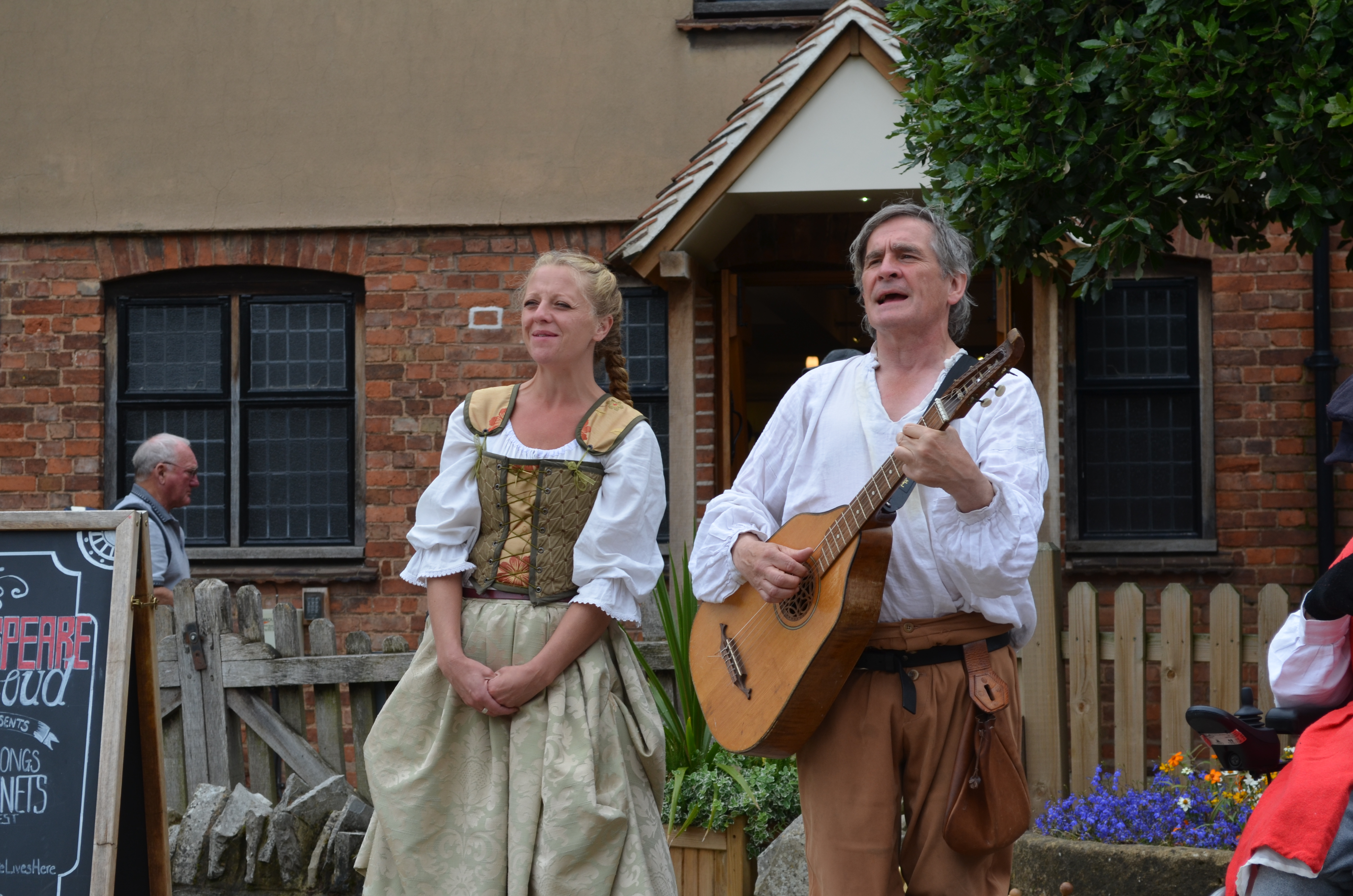
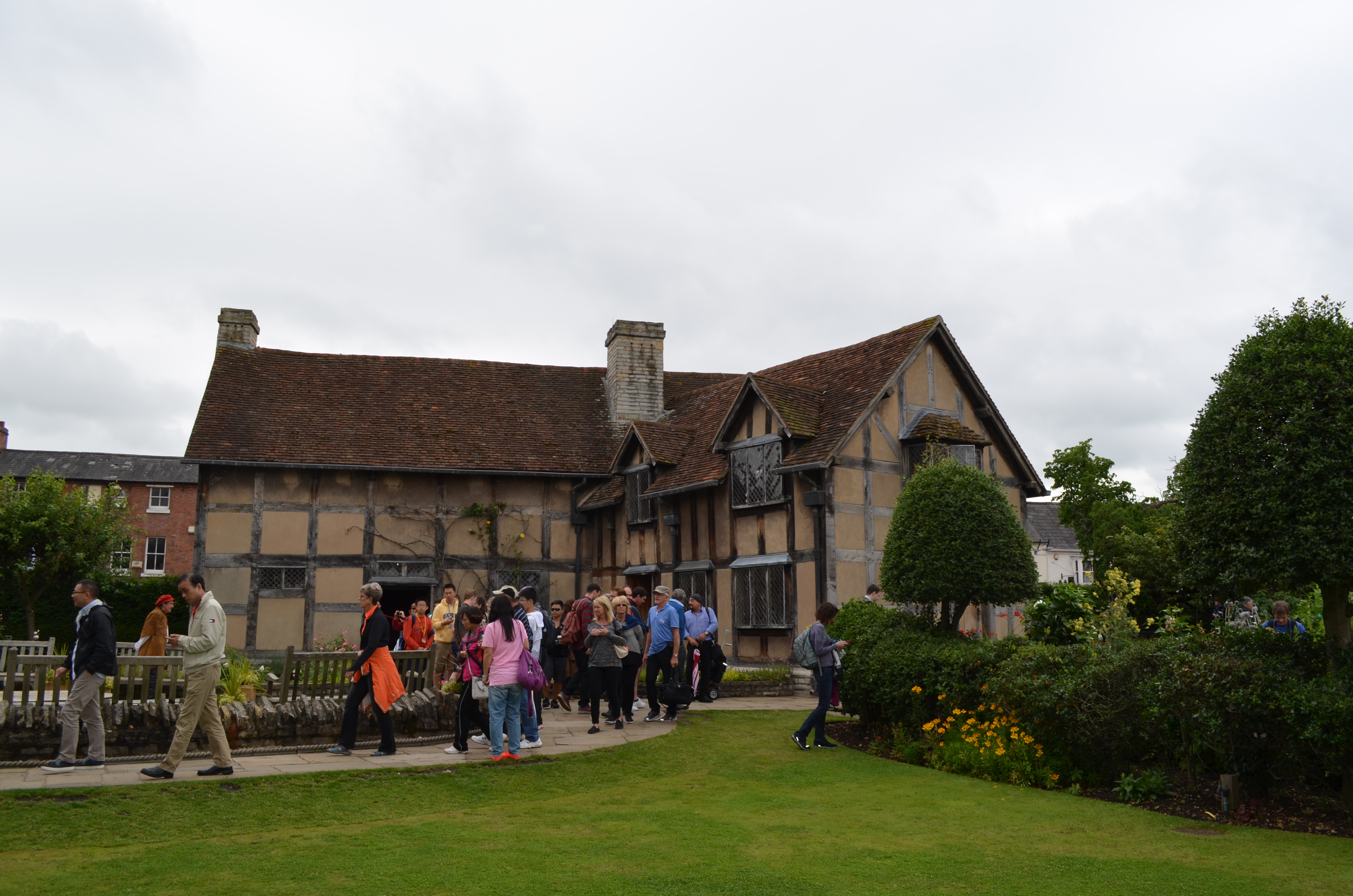
I walked all over Stratford-upon-Avon, visited Shakespeare’s birthplace, and spent hours listening to the “Shakespeare Aloud” players, who can recite and act many scenes from plays and sonnets on request. I placed my hand on the stone that used to be the marker at the centre of this lovely market town, a stone that Shakespeare surely would have touched and maybe sat upon – it is one of the few relics that we can be almost certain was touched by his hand.

The Shakespeare Aloud Players

The Shakespeare Aloud Players

We watched Henry IV part 2, brilliantly acted at the RSC, using a thrust stage (I was unaware that was what it was called until educated by Eve), which would have been the style used in Shakespeare’s time, bringing the actors into the audience and providing multiple points for dramatic exits and entries. To say I was entirely absorbed by the play, which though I have read I have never seen before, is an understatement.

The "thrust" stage at the RSC

The “thrust” stage at the RSC

On a rising tide of enthusiasm I began to write. A plot, a sub-plot, characters names and personalities forming in my mind, weaving twists and turns into my storyline taking inspiration from what I had seen and heard during my visit. The outline came together quickly, I found using a notebook and a pen was the best way to capture the rapid changes of direction that my brain is wont to do, the written story outline has become punctuated by scribbled diagrams to represent the plot, notes in the margin mark where I had a sudden realisation that I’d missed something or that more embellishment was needed. I was on a roll, I hadn’t written like this in years. I described my ideas to Eve – she is a great encouragement (also a little annoyed that I didn’t finish my last book as she’d enjoyed the first chapters that I had written for her) –  and  thought I had the makings of a good story. Always championing equality Eve has also reminded me of the Bechdel test – a recently developed test to guard against gender bias – does my work contain at least two women who talk to each other about something other than a man? I pass. As a result I’m now looking even more critically at what I write, what other “tests” should I apply? It’s no good having  what I think is a great story if it doesn’t have “reader appeal”. My preferred genre is historical fiction – the attraction is that they are always historically accurate – the unwritten rules seem to be that there must be several characters who actually existed during the period and the story must revolve around some real events. Authors of historical fiction tend to explain in the preface that their work is not an accurate account, some events may have occurred in a different order, and the conversations and actions of many of the characters are imagined – but nevertheless the historical context is correct. I have set about researching the techniques and approaches that authors use more thoroughly, looking at what I can “get away with”, mine is a tale that traverses two time periods – so my challenge is making it believable, but there are more examples of this style than I could have imagined – there is certainly no shortage of ideas. I am starting to think that I can write, that I should write, that I am a writer. I have been mistaken for being an “actual” writer twice now since I started this novel. It’s a case of mistaken identity but an identity I’d like to believe of myself. The first occasion was in discussion with the lighting director at the RSC, a thoroughly interesting chap, whose art is to bring the stage alive with different lighting techniques, during our conversation Eve mentioned I was writing a book, which interested him and, although I briefly tried to deny that I was a writer, as the conversation continued I found myself talking as if I was – more to the point he spoke to me as if I was too. The second occasion was surreal to say the least. Eve and I had returned to Stratford-upon-Avon a few weeks after her course so that she could meet  with the course director again as a follow-up. That left me with an afternoon to myself. Having an open ticket to Shakespeare’s Birthplace, I could think of no better location to sit and write further. I installed myself at a wooden table on the lawn outside the cafe, with the house as the backdrop, and ordered a pot of earl grey tea. I then got out my notebook and began to scribble away. I must have been writing for two hours without a break – it was a perfect day for writing, with the sun shining, and some natural dappled shade from the trees, an occasional light breeze preventing the heat from becoming uncomfortable. In the garden next to me I could hear the Shakespeare Aloud players reciting one well-known speech after another – as the audiences came and went I must have heard “Two households, both alike in dignity…” and the rest of the prologue from Romeo and Juliet at least a dozen times! I was just about to lay down my pen to listen more closely to one of my favourite speeches from the Merchant of Venice (Portia’s “The quality of mercy…”), when twenty or so Chinese tourists came into the garden, I thought nothing of it as this is a regular occurrence, and I sat back and tried to listen. It was then that a Chinese gentleman approached me, pointing excitedly at his iPhone, grinning widely and saying “please”. As I am from the tourist city of Cambridge this was not unusual to me, visitors often ask if you would mind taking a picture of them and their friends or family against a famous backdrop – so I went to take the iPhone from him. But no, this is not what he wanted, he wanted his picture taken with me. I tried to explain that I was nobody famous, just visiting here myself, they spoke no English so that explanation was pointless. I even tried in French – the only other language I am semi-fluent in – as someone later pointed out to me, that scene may have  appeared somewhat farcical if ever played back to me – an Englishman telling a group of Chinese in French that he is not famous! That wasn’t the end of it though, having had my picture taken with this gentleman the rest of the group started queuing – a very orderly queue – to do the same. I must have had my picture taken fifteen times either shaking hands with a Chinese gentleman, or with a Chinese lady leaning on my shoulder (their preferred poses, not mine!). All this time the cafe manager looked on from the balcony somewhat bemused, but finding it rather funny. All I can imagine is that they genuinely thought I was a well-known writer, placed there as a resident author for the tourists. I am still intrigued as to exactly who they thought I was and I can’t help but wonder what captions and titles will be on their photographs.

Shakespeare's Birthplace

Shakespeare’s Birthplace

Mistaken identity or not, I do feel more like a writer these days. I write most days. My day job is still the same, but in my head I am moving towards writing as a way of life. It will take some time, maybe I will never manage it professionally, but the more I write, the more I practice, and the more I get mistaken for being a writer, the more I feel that I could be one – no mistake! I wonder if my work will ever be translated into Mandarin…

Looking Up at Big Skies

Big skies are a feature of living in the Fens – the flatlands of East Anglia. For those of you not familiar with the geography of East Anglia it’s that bit of England that juts out into the North Sea from the east coast (see illustration below). The skies are big – or appear big – due to the fact that the land in the fens mostly lies below sea level and is incredibly flat – there are no hills or mountains here to obstruct the view, and the countryside is gloriously free of tall buildings.


East Anglia - home of the Fens

East Anglia – home of the Fens


Sky gazing out here can make you feel incredibly small and insignificant. The sheer vastness of what you are looking up at is hard to comprehend, as is the way in which the same sky can change in appearance in an instant. During the summer the fen skies are at their best with stunning sunrises and sunsets, amazing dawn and dusk cloud formations, brilliant sunshine burning clouds away to azure blue skies in the heat of mid day, and the cloud free sight of a million stars at night – The Plough and Big Dipper easily identifiable.

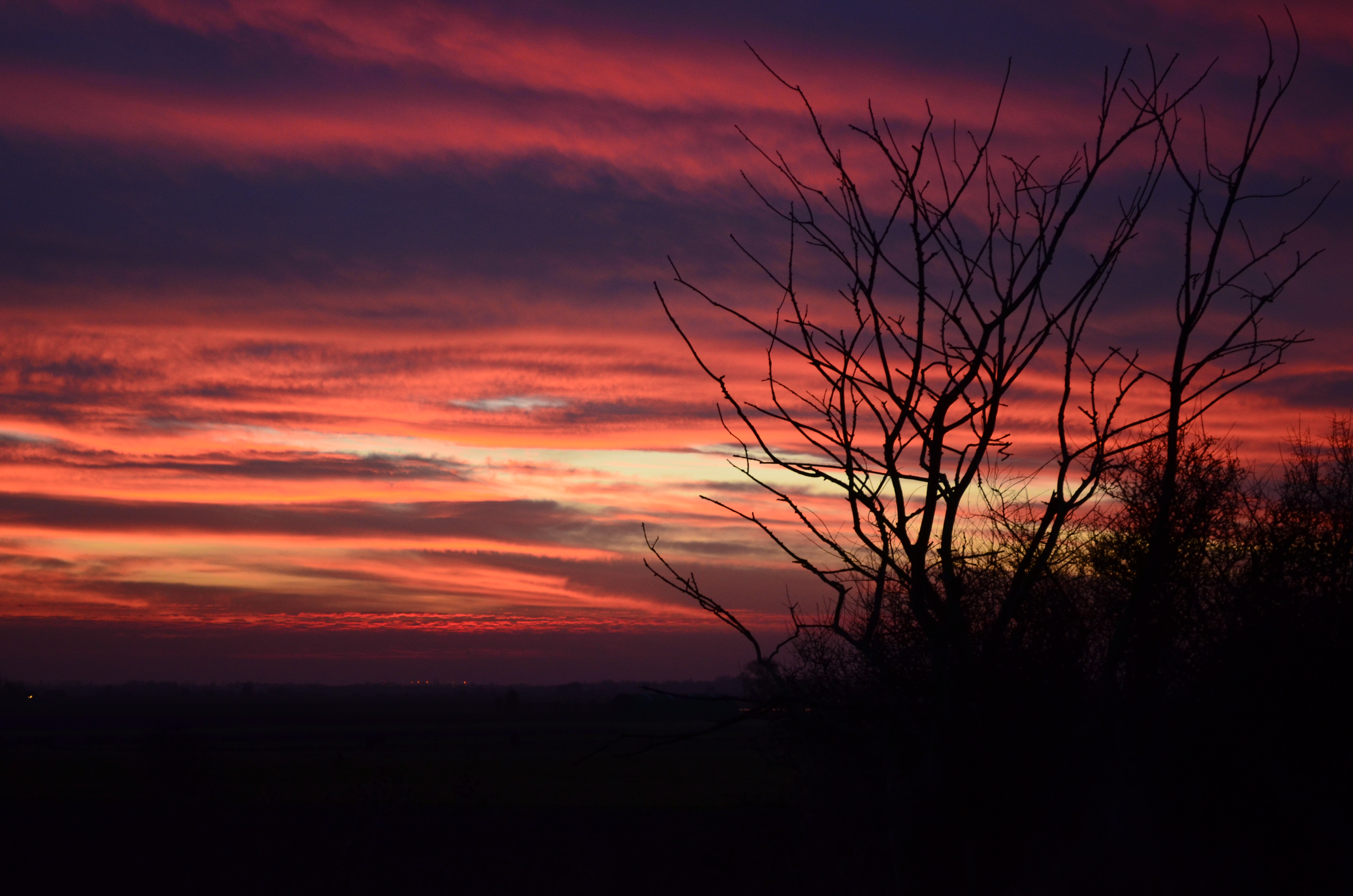
A winter sunset in the Fens

A winter sunset in the Fens

It is a privilege to live here and to experience these vistas so frequently. The winter months bring about a stark transformation to the landscape and sky scape. November is the darkest and greyest month in the fens, ploughed black soil fields merge with dense grey clouds delivering their pay loads of opaque sheets of rain. Morning and evening mists complete the totality of greyness as, shroud like, it envelopes everything and everyone. Yet there are still moments when the sun breaks through, surprises you with a deep orange sunset as it sinks early into the low clouds on the horizon (see above). The shafts of sunlight seem to illuminate the clouds from within and without – at moments like these I almost feel that God is touching the sky. In the late winter and early spring the clouds start to break a little, and the sun dances with the rain showers to provide us with frequent rainbow delights which are so clear you are almost compelled to reach for that mythical pot of gold.

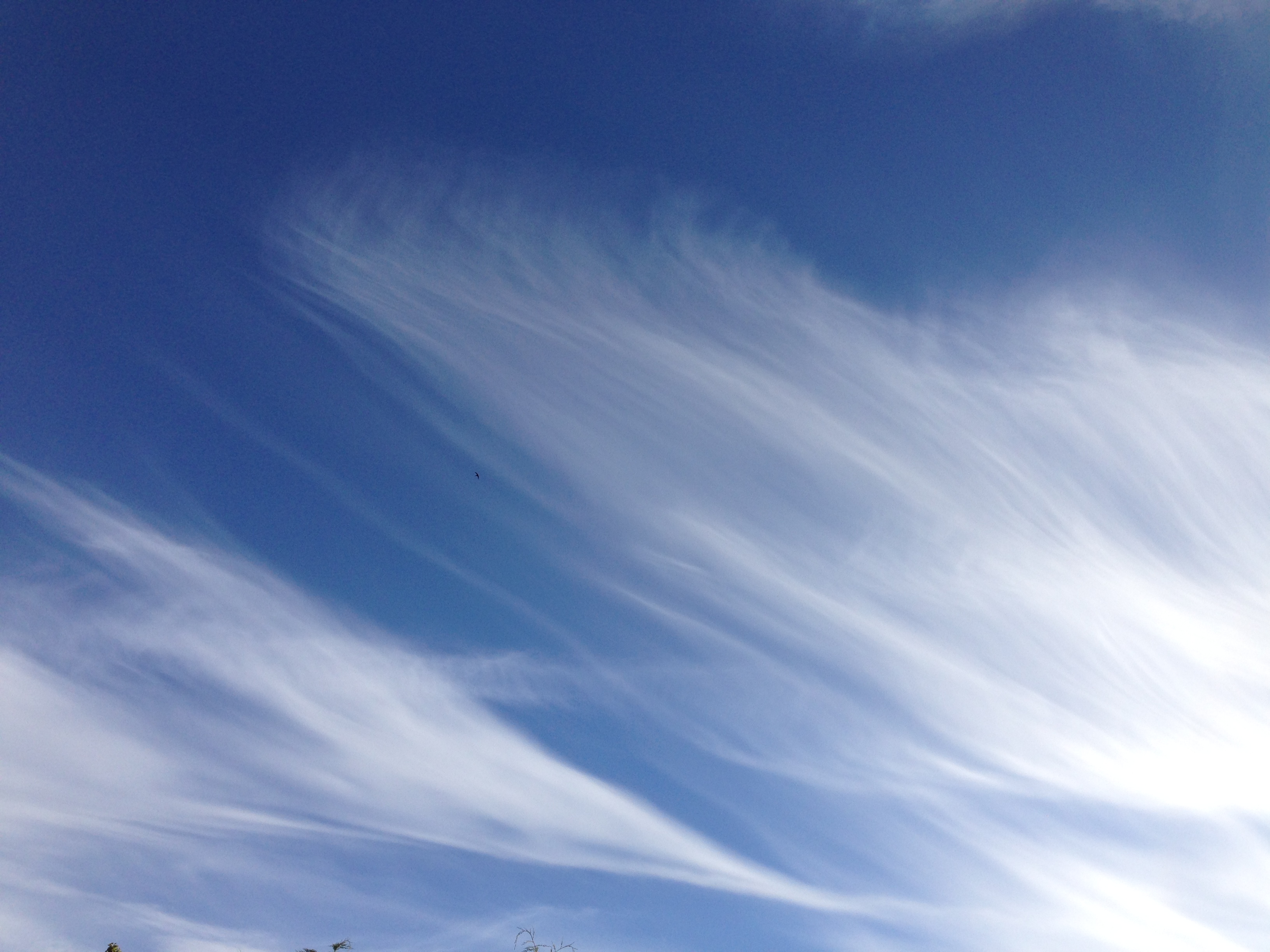
Cirrostratus clouds high above the fen on a summers day

Cirrostratus clouds high above the fen on a summer’s day

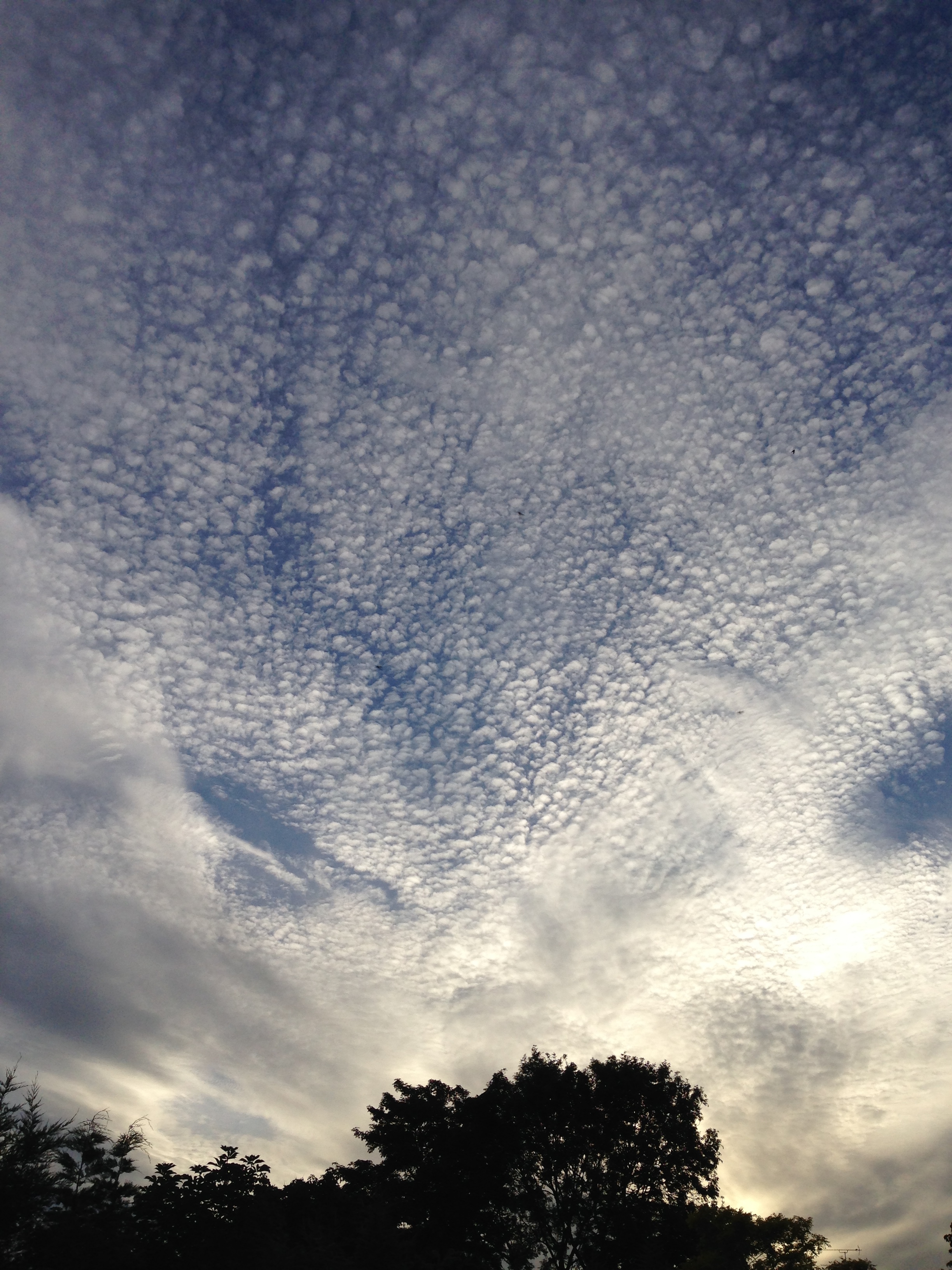
Cirrocumlus clouds in the summer evening fen sky

Cirrocumlus clouds in the summer evening fen sky

When we run about our busy lives under these amazing skies it is easy to forget the true wonder of this dazzlingly diverse creation. It is easy to get lost in the day-to-day and forget to look up from our desks, from our trudge to the office, from our weary seat on the train. I have been lucky enough to travel the world and see the sky from many different parts of the globe, it is a constant source of wonder and delight that the same sky can be so different; from the deep blues created between Ocean and sky in the Caribbean, to the dark stillness pin pricked by night stars in the Nordics; from the stunning sunrises of the Florida Coast as the pelicans fly past in formation to the surfers paradise sunsets of Pacific and Mission beaches in San Diego; from the top of Mont Royale in Montreal – the summer sky like a blue canvas backdrop to the city scape far below, to the sky scraping heights of New York City, with the sun bouncing off the Chrysler building and the blue sky reflected like a lake in high-rise windows. Over the years I have trained myself to look up wherever I go, so much so that it is now second nature – I’m afraid I might miss another wondrous sky display.

Pelicans skim the ocean as the sun rises turns the sky red and the sea orange

Pelicans skim the ocean as the sun rises turns the sky red and the sea orange

Tower 21 at Sunset, Mission Beach, San Diego.

Tower 21 at Sunset, Mission Beach, San Diego.

You’ve guessed by now of course that this piece of prose is merely an excuse to publish some of my own photographs taken in some of my favourite places. I’m addicted to sky pictures, particularly sunsets and sunrises. Wherever I visit  it’s not unusual for me to check the sunrise times and be awake and ready at the best vantage point a good thirty minutes before the sun appears. I similarly make an appointment with the sunset.

I hope you enjoy these pictures as much as I enjoyed taking them. Most of all I encourage you to always look up, and view the sky with a renewed wonder each time.

Eiffel Tower against a blue and white spring sky

Eiffel Tower against a blue and white spring sky


Rusty Rider

Rusty rider – that’s me – or rather that was me. In February of this year I decided it was time to test my nerve after being away from motorcycling for the best part of 30 years. So I enrolled myself on a one day course – called “Rusty Rider” to see just how safe, or unsafe, I would be getting back on two wheels on public roads.

I’m not sure who was more surprised – my instructor or me – as, in the safety of the car park, I quickly mastered riding one of their 600cc bikes at walking pace, making figure of eight manoeuvres and stopping at a designated point. That took ten minutes, and then we were ready to take on the Cambridgeshire roads. Motorcycles have changed a great deal over the last few years, they are bigger, more powerful and full of gadgets. However, the feeling of freedom on two wheels is unchanged and I enjoyed every second of being back on a bike, even on a rain-soaked day.

Having completed my course I was ready to think about buying my new bike. No shortage of opinions from my friends on social media, some are Harley Davidson fans, others prefer Triumph, Italian bikes appeal to those who like sophistication, and BMW’s have their own loyal fan base. So taking all these opinions into account, and having read just about every motorcycle magazine and review of new bikes available, I settled on 6 to choose from – two Harley’s, two Triumph’s and two BMW’s. Motorcycling though, despite the fact that you are on two wheels on your own, is not a solitary past time – so I was going to need some company on test day.

Enter Andy. I hadn’t seen Andy since before I gave up motorcycling. We’d connected on Facebook a while ago, but the motorcycle discussion had reignited an old relationship. Andy and I had been school friends – I guess we were ‘best friends’ back in 1974-1979. We quickly set about organising a test schedule, and after a few rainy delays we finally got our day, and if either of us was apprehensive about meeting up again after so long it didn’t show. We ended up riding eight bikes in eight hours, stopping to swap and exchange opinions. We had a lot of fun!

Unlike me Andy has kept riding over the years, so having such an experienced rider for company was reassuring, he also knows the Cambridgeshire road network better than me (a legacy from his career in the local constabulary), so we were able to put the bikes through their paces on a variety of routes. I followed Andy, feeling safe with his traffic awareness, and copying his well honed road craft. Echoes of our old school life, when we stuck together in friendship and for safety. Our school didn’t have the best of reputations and had a real bullying problem; Andy and I, with a few others, developed a safety in numbers approach to protect ourselves against the more violent pupils. As Andy put it when we first met up again, “we survived secondary school”. Sticking together so closely back then did have other advantages – we won the school badminton doubles championship, and went on the represent the school at county level. We were widely acknowledged as the best opening pair in the cricket team. Those reputations, founded on our understanding of each other, were important to us, and helped us develop our own “school road craft”.

The shiny chrome of the new Triumph Thunderbird was more impressive than the ride quality. Photograph courtesy of Andy Nightingale ©

The shiny chrome of the new Triumph Thunderbird was more impressive than the ride quality. Photograph courtesy of Andy Nightingale ©


Old passions rarely die, and old friendships – once rekindled – can play an important part in our ‘later lives’ – those shared experiences from the 1970s, as well as new shared experiences, create bonds that can’t be summed up in a simple essay. They are reassuring and, despite the intervening years, have an air of constancy. I am looking forward to riding a motorcycle again, but more importantly I am looking forward to some tours with Andy, the formidable badminton champions of 1978 and the best opening bats in the cricket team finally reunited. We don’t need reputations now, we’ve both had good careers, happy marriages and have lovely families – that security has probably given us both the confidence to reconnect.

It sounds terribly clichéd, but I was determined to get the phrase into this article: getting back on a motorcycle has been like riding a bike, but more importantly so has rebuilding a friendship. I don’t feel quite so rusty at motorcycling or close friendships these days.


The bike I have chosen.

The bike I have chosen.


D-Day Dilemma

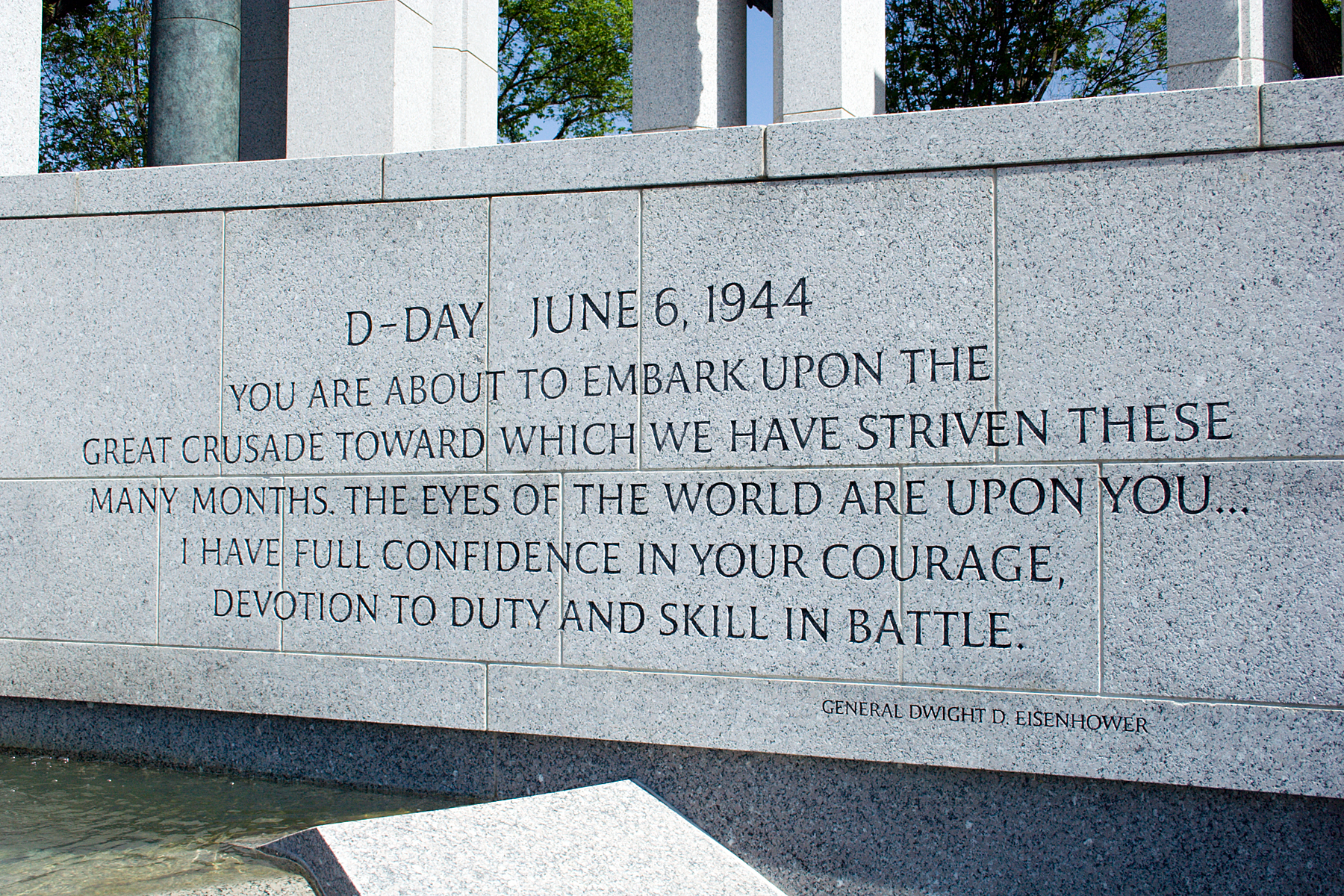
description-d-day-quote-jpg

Last week and over the weekend the D-Day landings on the Normandy beaches in 1944 were commemorated in many ways. World leaders gathered to pay their respects and some seemed to want to be seen doing so, sadly some even using the occasion for political posturing. The media were everywhere. All a far cry from the horror of a world war and the death and destruction that was required to defeat Nazi Germany.

Old soldiers gathered respectfully, along with families and current day servicemen, in the Normandy towns, villages and on the beaches in remembrance of their fallen comrades and to make sure that, seventy years on, they are not forgotten. The number of veterans able to make this trip – for some an annual event – is ever dwindling. The youngest of those that remain are in their late 80’s and soon that generation will be lost to us, and their personal accounts will remain only in writing and recordings.

One such personal account that I heard on saturday morning put everything into stark contrast. I was stopped in my tracks by a radio interview with a gentleman by the name of Harold Nash on BBC Radio 4’s ‘Any Answers’. The moment that I heard this man start to speak I knew that he was speaking with experience and authority, even though he is ninety years old. The presenter of the programme was stopped in her tracks too, finding it very difficult to move on to a more mundane item after having heard such wisdom from one of the most profound interviews she is likely ever to do. She said “it made the hairs on the back of my neck stand up”. Just as it did for many, like me, who were listening. The radio station was inundated with calls and messages not just in support of Mr Nashs’ views but with respect for his gently spoken words reminding us of the futility of war and killing, the dilemma of how to commemorate, and a reminder that the only justification there can ever be for war is the pursuit of peace.

Harold’s challenge to us all is to think more about how we remember those that fought in such dreadful circumstances. The rattling of sabres – the military shows and parades, the drills with bayonets fixed to rifles, the shooting of rifles and guns in salute – to Harold are inconsistent with what he and his comrades risked their lives for. The celebration of killing other human beings, and the tools used for doing so, is for Harold,  not in keeping with why he fought. Harold fought to bring an end to the war. Harold fought so that future generations would know peace.

As Harold recounted part of his own story the humility of such a brave and honest man shone through. He talked of himself as being a coward during the war – because he was afraid. He talked of being humbled when in occupied territory as he was offered bread by those ordinary people who earlier he would have been bombing and trying to kill. He quoted Albert Schweitzer. He talked of governments being unable to think his way, and that they may not see the inappropriateness of a celebration of killing,  which he understood; but having heard him perhaps governments should think like Harold. He talked of understanding why some seek to remember with pomp and circumstance. And all the time he talked, it was with a voice that told the listener that this man knew right from wrong. This man knew the horrors of war. This man still carried regrets for the lives he had taken. This man did not want to be talked of as a hero.This man did not need the sight of marching soldiers to remember what happened seventy years ago. This man remembered his comrades every day. You sensed that Harold did his duty as he served as an RAF navigator, and fought with good reason – because he fought for peace and a return to normality. Tellingly, when he returned to civilian life it was as a teacher. As I listened to him I couldn’t help but think what a great teacher he must have been. What must it have been like being taught by this emotionally intelligent, caring and insightful human being?

With such wisdom, listening to Harold may lead some to wonder why, in this modern era, we do not heed our elders more. Why do we not learn more from their experiences? Are we so intent on getting everything done so much faster with the latest technology that we have lost the ability to listen, reflect and learn? What if we were to seek advice on some of our bigger life decisions from our elders who have been through it all before? Would we find such counsel helpful or would we be too impatient to listen and reflect? When I recall some of the best advice I have ever had, it has almost always been from someone older than me, someone with more experience, someone with a perspective that I lack. What if our town councils had a council of elders to turn to for advice, insight and perspective? But so many in today’s world are content to go headstrong and headlong into the next crisis, the next drama, the next scandal, the next debacle, and to execute the next ill-conceived strategy. To pause, reflect and consider wisely is the gift of few. It is those few, the Harold’s of our communities, that should be given air time, not sound bite politicians, not fame seekers, not headline seeking investigative journalists. We need more Harolds.

The interview with Mr Nash is still available on the Radio 4 website here: http://www.bbc.co.uk/programmes/b045xpq2. I urge you to listen to it  while, and if, you can. The interview starts at around 2 minutes into the programme.


I Believe in Fairies

We don’t have that many watershed moments in our lives, those moments that change everything forever. April 24th 2014 was one of mine. That’s the day that my mother died. She died suddenly and unexpectedly. I wasn’t ready for it. I don’t think she was either. I miss her. I miss her voice, I miss her argumentative nature, I miss her occasional spoonerisms, I miss her wit, but most of all I miss her laughter. My mum taught me much, she taught me tenacity, she taught me the value of hard work, she taught me to fight against those who said I ‘couldn’t’, she taught me to be fierce but also when to back down gracefully (though to be fair we both found that last one a challenge). I see that self same tenacity and work ethic in my own son – overcoming his dyslexia to become an intelligent and able student. We passed it on, mum.

It’s a watershed because I have started to write again, the emotions of the last few weeks needing an outlet. I started to write stories and poems ‘proper’ when I was nine years old. That was mums doing – with little education herself she still spotted my love of, and perhaps a little talent for, writing and language. She encouraged me, took me to see Shakespearean plays, and helped me choose which authors to read based on my emerging tastes. I read, or was read to, every day of my childhood, my room was a bookcase, a bedroom-cum-library. Mum learned with me as I read more and more, and we discussed everything from the great poets to the popular authors of my childhood. We learned together. At ten years old I was published in a local poetry anthology for children. I won a prize for it – it was a gift token – I bought a book. I’ve been buying books ever since, there isn’t a room in our house without a bookcase – we have nine of them I think, some with books double stacked, plus around a dozen boxes of books in the attic. I still read a great deal, and discuss the great poets and authors of our time with my daughter – I learn as she learns. We passed it on, mum.

It is a watershed, because now I have to face the rest of my life with all of those things she was as just memories; we can’t reminisce on those old shared experiences ever again. Mum and I didn’t see each other every week, nor even every month, but her influences were always there. We had our differences, sometimes heated ones, but we shared that unique mother/son bond as well as that unique mother/first born bond. We were special to each other in a way words couldn’t describe, if we fell out we would both be tearful. It’s a watershed, because at fifty years old I finally have to grow up. Mum’s not there to talk to now, not there to counsel, or to debate, argue and disagree with, she’s not there to be the arbiter of family disagreements. I’m the grown up now. I don’t want to grow up. Not yet.

But as I was writing I realised  that part of my mums enduring charm and spirit was that she never truly grew up. She could, of course, act grown up when convention dictated. But she never yielded to having to fully grow up. She still did the things that she wanted to do, the way she wanted to do them, no matter if they seemed childish or even a little foolish to others. Thats what made her so creative. On the day that she died she had been teaching herself to paint with water colours. She painted fairies. She loved fairies and truly believed that they existed, which seems quite childlike, and perhaps it is – but that’s the point of refusing to grow up isn’t it? – to still look at things with a childish wonder and to believe in the fantastical  – and that captures the essence of my mum, her readiness to see things as a child might.

I have a lot to thank my mum for; for passing on the gifts of tenacity and doggedness, thanks for passing on the gift of literary exploration, but most of all thanks for not growing up, thanks for showing me that you don’t have to grow up in everything. Thanks for believing in fairies. Perhaps if I believe in fairies too this watershed won’t be so bad. I believe in fairies.

Image