Resolutions: The Importance of finding a “Bill Spratt”

When I was fourteen I wanted to be taller and faster. I’d been the skinny kid for all my school life up to that point, and I wanted to be bigger and to be able to win races. With a birthday just before the start of the New Year, I decided to combine the two and I resolved to grow as much as I could in the following year up to my fifteenth birthday, and to take up athletics to make me faster.

I embarked on a regime of exercise and a high protein diet which,  based on my limited knowledge of nutrition science, I decided would make me grow taller. I took up running, joined a local club, and ate more eggs and chicken than ever before – my mother however drew the line at letting me eat steak on a regular basis.

I trained hard. Beginning in the winter months proved to be a good test. My coach, a local man named William Spratt (known to all as Bill), was supremely fit although forty years my senior, and he would make me train in all weathers. Three times a week I’d run a mile, meet Bill and we’d continue on a circular route for another two miles that would bring us back to my house and then he’d continue on afterwards back to his house – I worked out later that he knew the distance from my house to where we met, and that I’d run three miles each time, but he’d run twice that. I also found out that Bill had been the first Cambridgeshire man to run a marathon, and he was something of a local legend, although he never mentioned it. I felt very fortunate to have him as my coach. He was a tough coach though, more than once I phoned Bill on a training night to say “it’s raining hard” or “the snow is quite heavy”, followed by “shall we give it a miss?” – we rarely did, the only time he would agree was if the conditions underfoot were dangerous – either too icy, or compacted snow. Rain was never an excuse. During our winter training Bill decided I would run the 400 metres on the track in the summer season, as this would suit my leaner frame and he would make sure that my endurance levels were high enough for this demanding distance, which is run as a sprint.
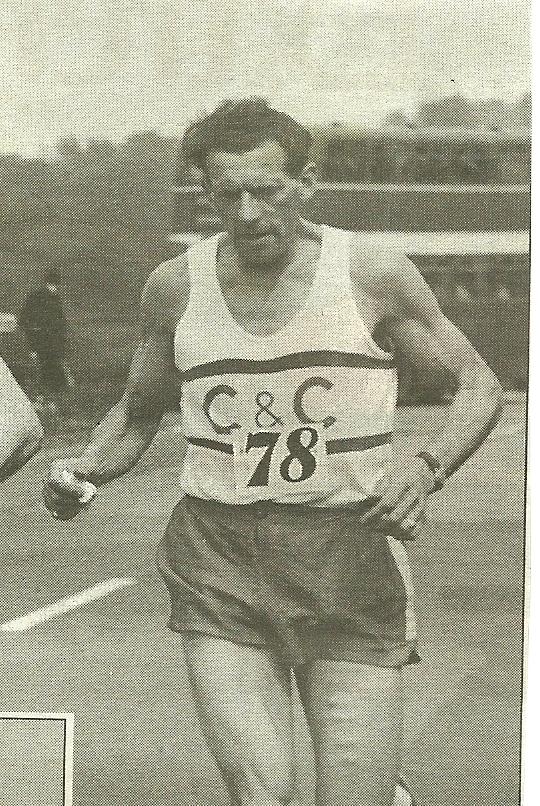
Bill - my athletics coach and mentor

Bill – my athletics coach and mentor

On winter weekends Bill would take a group of us to train at our local woodland, where there was a steep incline of about 150 metres (not easy to find in the flatness of the fens!). He would drill us up and down this slope, in what he called a “pyramid”; this involved running up the slope as fast as we could, jogging back down, and repeating this in cycles of two, four, six, four, and two – in that pattern with no breaks in between. This was designed to push our endurance and build stamina.

Bill entered me for local and regional cross country races, I rarely finished higher than twentieth in a field of forty or more. I later learned that, as a 400 metre runner, I wasn’t expected to, but this was all designed to improve my stamina and also test my resolve. I have to admit that I did feel like giving up in a few races that went ahead despite driving snow, but I never did – Bill had taught me to run through the pain and the dips in energy and confidence.

Wednesday evenings were club meetings, the club was big, and the evenings were well attended by juniors through to veterans. I was one of the youngest, yet found myself training with a group a few years older than myself. We ran circuits around the streets near the club meeting place, and the drills were long and hard, but I loved drilling with the older kids, always trying to prove myself against them, seeing if I could keep up with the sixteen and seventeen year olds – of course I rarely could, but as my training went on I found myself only just behind their pace.

Around March of that year it was our inter-house school cross country. I’d told no-one, other than a close friend, that I’d been training, and then I entered the cross country – actually volunteering for it raised a few eyebrows! It was only a three mile race, so just the same length as my training runs. At the start I didn’t sprint to the front, I held off the pace a little, letting the usual boys surge ahead, but I didn’t let them get away from me. After about a mile I realised that this race was being run at a very slow pace, well below what I was used to in my training, I let it carry on that way for a few hundred yards more and then I just got bored of running so slowly, so I upped the pace, hit the front and before I knew it I was 100 metres ahead of them all. I recall my friend, who was racing too, shouting “go with him, he knows what he’s doing” – but nobody could, and I waited a good thirty seconds for the next person at the finish line. That was a good feeling, and I realised that just as I had resolved, I was becoming faster.

Then we got to the late spring, and the track season opened. We started training on a proper running track. It was the old fashioned cinder surface, most of which have since disappeared and have been replaced by the much friendlier tartan all weather surfaces, but I loved that cinder track, which gave me my first taste of running on a real circuit in spikes. We trained hard that spring, club nights were now at the track, although I kept my thrice weekly training road runs with Bill. At the track there seemed to be more people than ever, I was put into a group with four other boys, all a little older than me. We focused on sprint training, and more pyramids (this time on the flat though).

We trained hard all spring and into the summer. My legs had started to get very large, with muscly calves and thighs, and I remember my mother getting quite exasperated at the speed with which I was growing out of trousers – not just by height, but by the girth of my muscles. That summer I ran my very first competitive 400 metres, I finished fourth in a field of eight, and clocked a time of sixty seconds – which wasn’t a startlingly quick time, but at that age was not too shabby for a first race. Bill was happy. If Bill was happy, I was happy.

That summer, following my cross country victory, I was expected to take a clean sweep at the school athletics house competition. But I knew there was one boy that stood in my way, Martin Cleary. He was tall and fast. I’d never beaten him in a straight sprint at any distance. I discussed this with my mum, and I remember her saying to me , “David, have you not noticed how fast you’ve grown this year? You are nearly as tall as your father”. So absorbed had I become in my short terms targets that Bill had set me, that the cross country race had presented, and that  weekly training had given me, with a focus on getting quicker, I’d forgotten about the first half of my resolution – to get taller. Of course, I had been able to control my running speed improvement; by sticking to a strict training regimen I had improved my endurance, my stamina and my speed – these were all variables that I was able to influence to a certain degree subject to my own discipline and dedication. What I could not control, was how fast I grew or how much I grew. As it happens between the ages of fourteen and sixteen I went from barely being five feet tall, to being almost six feet tall. At age fourteen and a half I was now taller than Martin Cleary. More importantly to me, I was now faster than he was, and I finally beat him! Later that summer I went on to run the 400 metres with my club in under 55 seconds, and progressed to county standard – I really had got faster! My personal best a few years later was 50.2 seconds.

The moral of this story from my own personal trip down memory lane? Well it’s quite simple really, what I did all those years ago, without even realising, was to make an ambitious resolution, only to have it broken down into more achievable shorter term objectives by my coach, who knew a lot more about how to achieve my goals than I did. If I had set myself the goal of winning the cross country, running under 60 seconds in the 400 metres, or beating Martin, then I doubt that I would have focused on the steps to get me there. Bill provided me with those steps. Maybe we all need a Bill, to keep us company as we work towards our grand objectives we set ourselves as New Year’s resolutions, it is the Bill’s of this world who have the wisdom to help us achieve those objectives stepwise. So if you are considering setting yourself a New Years resolution of losing weight, giving up smoking, eating a healthier diet, and so on, then don’t try and do it on your own –  find your “Bill”, and you will stand a much higher chance of meeting your resolution.

As for growing taller,  well I just happened to grow due to my genetic make up, so the lesson there is that there are some things we just have no control of at all, so don’t go wasting your time by setting totally impossible New Year’s resolutions – because if you don’t have the power to control the variables, then you cannot effect change.

So thanks Bill, you are long gone from this world, but you and the lessons you taught me are not forgotten.
Cristes Maesse

I have tried to write several blog articles about Christmas over the last few days, their content has been varied. I started with taking a look at the “commercialisation of Christmas”, but that just felt tired and cliched, and I found myself sounding very judgemental. Then I tried a different tack and started to write about “The meaning of Christmas” – an over used phrase I felt, that just pandered to peoples need to eat and drink to excess during the holidays. Again I ended up sounding judgemental. Finally I tried observational humour, recounting a few anecdotes of human behaviour that I’ve observed during the preparations for Christmas – mostly in the shops – but my humour began to sound, guess what, judgmental.

Time for some self-analysis I thought, after all I cannot let the festive season pass without making at least one post on my blog. So I asked myself this question: “why are you so judgmental about how people behave towards Christmas?’

The answer surprised me. That answer is quite simply because I regard myself as a Christian. I was surprised because I am not a very good Christian, regular church going lapsed a while ago, I don’t pray every day, and I don’t always got to church on the main days in the Christian calendar. A good friend of mine (who is now a vicar) once said to me, going to church makes you no more Christian than standing in a garage makes you a car – I’ve possibly taken that too far and have been part of the “non-churched” for quite some time.

But back to my not so Christian judgemental attitudes. I suppose I had not realised the strength of my own feelings about Christmas, and what it represents. There are many who argue that Christmas is overlaid onto older festivals, and will point to the historical process of how Christmas came to be celebrated in December, and how Yule and Saturnalia were there first. And that’s all interesting. But it’s not theological and it’s not spiritual, it’s just historical and the fact remains that we do have a festival called Christmas. It’s also not a good enough reason to sideline what Christmas celebrates; after all the name itself rather obviously has something to do with celebrating Christ; the title of this article “Cristes Maesse” is the old English meaning “Christ’s Mass”, which later became Christmas.

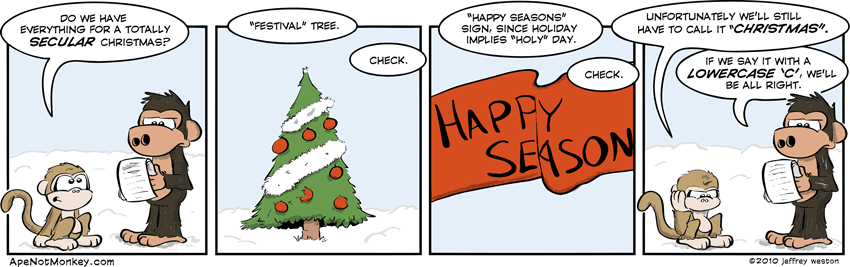
Secular Christmas Illustration by apenotmonkey.com

Secular Christmas
Illustration by apenotmonkey.com

Consequently the secular use and notion of Christmas (“Cristes Maesse”) sits uncomfortably with me, after all would society at large hijack Ramadan for its own purposes? Would the supermarkets make lengthy, cheesy, questionably distasteful commercials around Diwali? Would there be black Fridays and cyber Mondays geared around Hanukkah? And if the answer to these questions is ‘no’, then how has the Christian church allowed one of their two main celebratory days, the other being the resurrection at Easter, to be so secularised and taken over in this way? What if “Christmas” was a trademark or was copyrighted to ensure that it was only used by the church to refer to the celebration of the birth of Jesus, how different might that be? It is of course naive to think that we could divorce the secular and Christian celebrations of Christmas, so entwined have the traditions become over the years one can hardly see the join. But for Christians, Christmas is more than a holiday, it is a holy day.

As a Christian, and as cliched as it sounds, I really would like to see “Christ” put back into the celebration of Christmas. The fact that Christ, in many ways, has been displaced from how much of society celebrates Christmas is quite bizarre when you consider it in those terms. And that is precisely my point, there are few, if any instances, of secular society hijacking any other religious festivals other than the Christian ones of Christmas and Easter, and divorcing them from their spiritual and theological meanings. So why should Christmas be swallowed up by everything that is not Christian, and therefore not about Christmas? The birth of Jesus was arguably his first miracle, and it is the virgin birth that we celebrate on Christmas day, we give presents to each other to remind ourselves of the gifts the magi gave to Jesus to honour him, we sing carols that celebrate the manner of his birth – “O come all ye faithful, joyful and triumphant, come ye o come ye to Bethlehem”, is a call for the Christian faithful to make a spiritual journey in our minds to the time and place of Jesus’ birth, and we feast to mark the joyous significance of Jesus’ arrival. It is a true celebration of the birth of Jesus Christ.  On December 25th Christians will celebrate that He has arrived

I hope that I have not been too judgemental of the secular, I have no objection to a secular holiday of course, but I hope that I have provided a small reminder that Christmas is supposed to be all about Christ.

Merry Christmas.

Milestones


milestone

Last month my blog clocked up one thousand hits. I was quite surprised at how pleased I was with reaching that milestone. This got me looking back at all of my posts to see which had been the most read, and I realised that, with the exception of the “cooking trilogy”, every post I have written is related to some milestone or other (I suppose family meals could be milestones too!).  Why is this? – I wondered.

Perhaps it is because I tend to measure my life by those milestones – I know many people who do the same, perhaps we all do to a degree. Each marker in time  is some kind of right of passage to another stage, another chapter, of our constantly unfolding lives. I actually get annoyed with those count downs to milestones, as I see that as wishing one’s life away.The Christmas countdowns that start well before December are one such annoyance, wishing time away just seems plain wrong to me – we have only one life in this world, so why wish for it to pass more quickly? Like most people I’ve experienced times when I have wished time would pass more rapidly and give way to better times, but now those better times are here I don’t want the days and hours to flash by. Father Time though seems to have a wry sense of humour and, as the skilled illusionist that he is, gives the appearance of life passing slowly when things are  tough, but speeding it up when life is good.

Looking back at my blog posts, which only started in June 2014, the milestones are a combination of personal and societal. The death of my mother and the death of a good friend were two events that put life into sharp relief, a time for evaluation and re-evaluation of my own values, needs and desires. That’s when I began to write again and I have marked days of inspiration, reaching 15,000 words  in my book (20,000 now!), and now one thousand hits on my blog; these are small achievements, yet they mark my passage towards something I’ve always hoped for – some form of literary achievement. I haven’t recorded every milestone of course – that might be a little tedious for anyone who reads my blog  – but also some of these milestones are best kept private, so for example I’ve not recorded the details of my son’s departure for university and my daughter’s theatrical and musical exploits, they are things we talk about as a family, and that’s where the details stay – within our family.

Milestones though can be about more than just  personal achievement or marking the (hopefully) happy progress of our lives. Some milestones are marked on a national, and even global scale, there are some that will always be commemorated. In this blog I have written about the anniversary of D-Day and the observance of Remembrance Sunday – both all the more poignant as 2014 marks the 100th year since the outbreak of the first world war and seventy years since D-Day. Our nation marked those milestones with great respect. But they are still just that – milestones, they mark a point reached and another years distance from the real events, and the milestones become history themselves.

On a more upbeat note our US cousins have just celebrated Thanksgiving, a major annual milestone, and a time for friends and family to meet and give thanks for each other and what they have been blessed with. A positive and reflective milestone. Soon we will celebrate Christmas and then New Year, traditionally times when we look back at the previous year and it’s milestones.

Milestones become history the moment after they are reached. I am reminded of possibly one of the finest lines from a contemporary play, from Alan Bennet’s “The History Boys”, it is spoken by the pupil Rudge, who up to this point has been mostly monosyllabic: “How do I define history? It’s just one fucking thing after another”. It is a line played for wry laughs in the play, but of course it is true. History, is merely a sequence of events that occur in succession – whether that is our personal history or society’s. If we can do our utmost to make sure that “one thing after another” is made up of positive actions,valuable achievements, and enriching behaviours, for ourselves and those around us, then our personal histories we will have a strong influence on our society.

Perhaps there is a moral in here somewhere, and as we approach the end of 2014, for me that moral might be that in 2015 I am going to do “one good fucking thing after another”.


Note: Apologies if the expletive causes any offence, however it is a direct quote and loses it’s impact and emphasis if censored.


Thanksgiving: what’s the big deal?


Thanksgiving

I’ve never understood Thanksgiving. Or to be more accurate, as a “Brit”, even though I’ve visited the USA many times, worked with American colleagues and have many American friends, I have never been able to fathom why the Thanksgiving holiday is such a major event, possibly even eclipsing Christmas in its national importance and observance.

I’ve read about the origins of Thanksgiving, the debate about how it came to be, the influence of the English reformation and the puritans, the possible connections with the Dutch concerning the siege of Leiden (1573), the suggestion that the holiday has its roots with the early pilgrims in Plymouth, Massachusetts, fabled tales of feasts between pilgrims and Native American Indians, the Unionist rationale for fixing the date and so on. But nothing really explains why Thanksgiving has the national importance and significance that it does. Other countries have Thanksgiving holidays, but on the whole they are celebrated to a lesser extent than in the USA. Is it a holiday that exists solely to give thanks for the Harvest? In a country as vast as the USA surely harvest time varies depending on where people live and therefore so would their periods of thanksgiving. It is certainly nothing like a traditional harvest festival in Britain which, while a notable Christian celebration (particularly in rural farming communities like mine), is not a national holiday nor as major an event as Thanksgiving – maybe it should be. Harvest has it’s place in Thanksgiving – that much is clear – but it appears to be much more than a glorified harvest festival. And maybe it is because of that, that the religious and secular observance of the holiday is united.

If I’m honest, I am actually a little envious of Thanksgiving. From my observers perspective it seems to be a holiday that has retained a genuine meaning, relevance and significance that transcends belief systems (although what that meaning is founded on is still unclear). Of course it has it’s commercial elements – I’ve been to the Thanksgiving sales – but at its heart Thanksgiving seems to be a holiday of, well, Thanksgiving. I’m not sure it really matters that much what you are giving thanks for, whether it is the harvest, your family, home, community, and friends, maybe it’s giving thanks for your country and your freedoms.

It doesn't really matter what you are giving thanks for

It doesn’t really matter what you are giving thanks for (image courtesy of gallery hip.com)


In Great Britain, despite our long and vast history, we actually do not have a day like Thanksgiving, nor for that matter do we have a day like Independence Day; it would be a whole other discussion to look at the make up of the holidays in Great Britain and their origins, but we do not have a day where we celebrate who we are, or a day that we give over to giving thanks. As British citizens I fear that we may be morally poorer for a lack of a Thanksgiving celebration; for we too have much to give thanks for.

So tomorrow, when my usually hectic afternoon of telephone calls and video conferences with my US colleagues will be strangely quiet, I will pause for a moment and make sure that I give thanks for the things that I might otherwise take for granted. I will of course also enjoy the peace and quiet (maybe I should give thanks for that too!).

To all my American friends, colleagues and readers, I wish you all a very happy Thanksgiving holiday.

A Cooking Trilogy: Part Three

“Always start out with a larger pot than what you think you need.”

Nothing could be more true than this quote from Julia Child, so many times I have started to prepare a meal and realised that I have underestimated the required size of the pan, casserole or serving dish. It is a rule that certainly turned out to be true of this particular recipe once I had scaled it up to feed three hungry people!

Chicken, Mushroom and Bacon Pie – adapted from a recipe by Nigella Lawson

Ingredients – quantities are scaled up from the original, as well as the proportions being tweaked a little and substituting some alternatives to the original.

6 rashers of smoky bacon – I prefer the leaner back bacon, but streaky bacon adds a little more flavour due to the higher fat content. As an alternative, for those who don’t eat bacon I use  Quorn “bacon” slices.

A lug of garlic olive oil

250g chestnut mushrooms (don’t be tempted to go for button mushrooms, they won’t add enough flavour)

A knob of butter

400 – 500g skinless chicken breasts

50g of plain flour (I use a gluten free rice/potato flour)

2 teaspoons of dried thyme

550ml of chicken stock – if using bacon I use a knorr stock cube as it is less salty and the bacon itself adds enough salt, however if using Quorn instead of bacon I use oxo cubes which are saltier (the Quorn is not very salty)

2 tablespoons (30mls) of Marsala – well to be honest, that’s what the recipe says, but I always “add one for luck” – so really its 45mls!

Approx. 600g of potatoes that will mash well, I use Maris Pipers

Salt and pepper for seasoning

There is quite a bit of preparation with this pie, but it’s all very straightforward. Allow 30 minutes for preparation time and about 40 minutes for cooking.

Preparation

Prepare the following before you cook anything:

Slice the bacon into 2cm pieces

Thinly slice the mushrooms

Cut the chicken breasts into 2-3cm pieces

Prepare the chicken stock

Peel and cut up the potatoes and put onto boil in lightly salted water

Pre-heat your oven to 200C

Cooking

Now you are ready to start cooking:

Firstly, tip the flour and the thyme into a large freezer bag, add the chicken pieces, close the bag and shake until the chicken is coated in the flour and thyme.

Shake the chicken, flour and thyme in a freezer bag

Shake the chicken, flour and thyme in a freezer bag

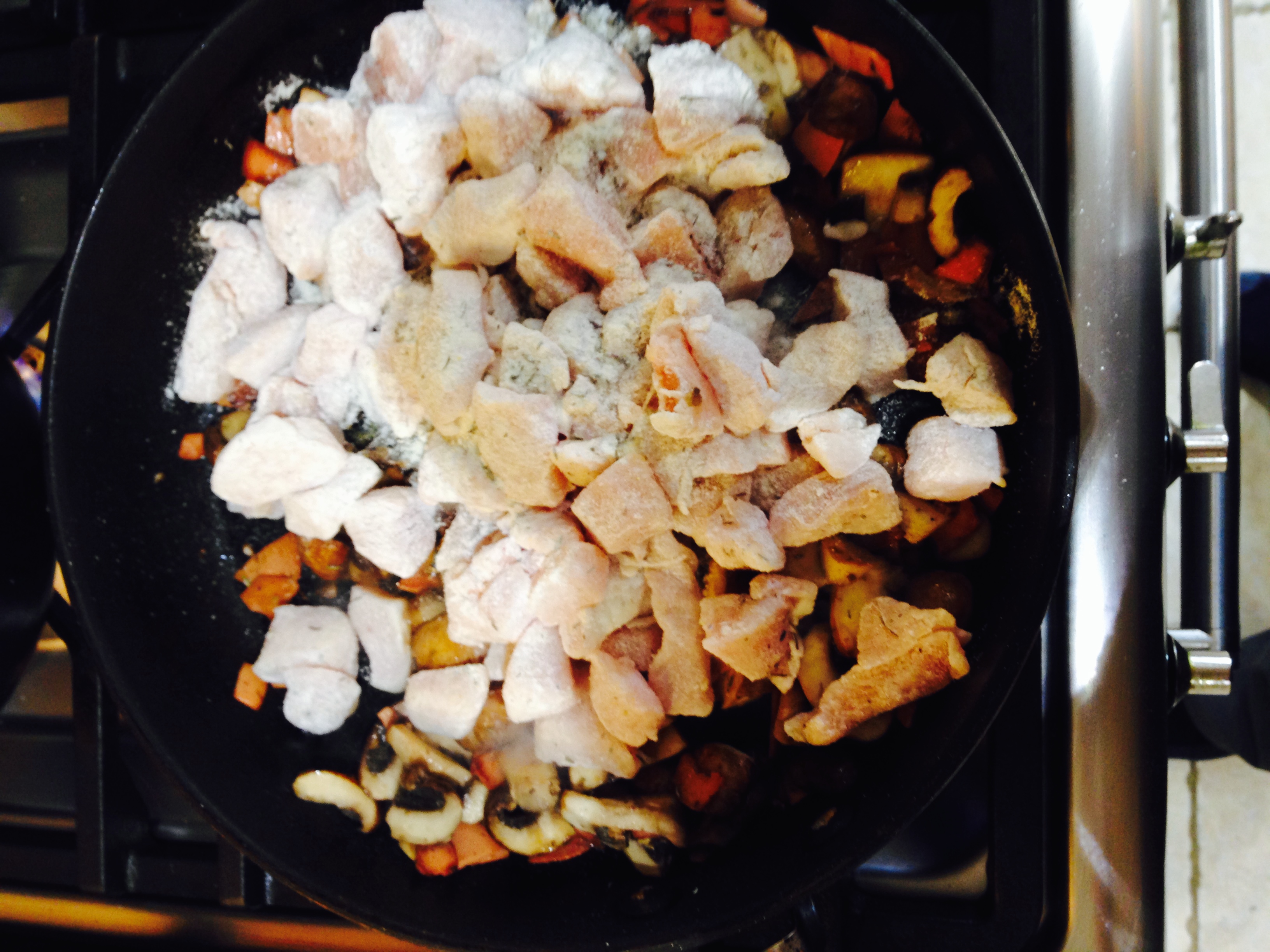
Put a lug of garlic olive oil in a deep frying pan, bring the heat up and fry the bacon pieces, once they start to crisp add the mushrooms and stir in with the bacon until they start to soften. Add the knob of butter, allow it to melt and then tip in the chicken. Adjust the heat to medium. Stir until the chicken has coloured on all sides – this just means so that the chicken as whitened on the outside. At this stage you get the lovely aroma of the thyme as it is heated.

Cook the chicken with the bacon and mushrooms until the chicken begins to colour

Cook the chicken with the bacon and mushrooms until the chicken begins to colour

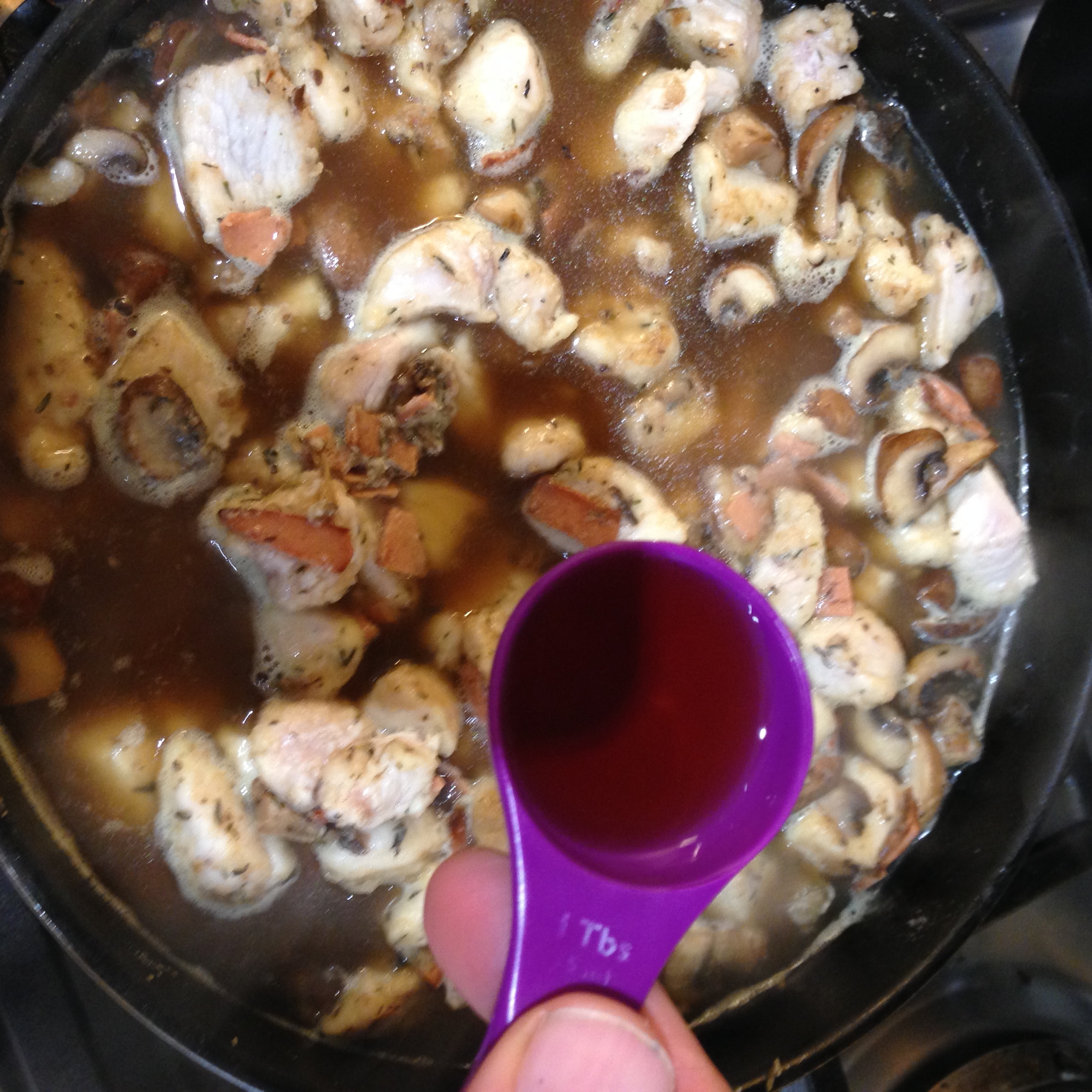
Now pour the chicken stock into the pan, and add the Marsala (there’s always a little Marsala left on the spoon, so it’s chef’s privilege to lick it!). Stir thoroughly, bring the heat up so that the stock just comes to the boil and then simmer for about 10 minutes, or until what is effectively a gravy begins to thicken – and that’s the consistency to aim for, a typical gravy thickness. At this stage, if you have used the Quorn bacon substitute, add salt and pepper to season – only a little pepper is necessary if you have used ordinary bacon.

While the pie filling is simmering away, mash the potatoes which should be cooked by now, a little butter will help to create a smooth mash.

Add the chicken stock and Marsala

Add the chicken stock and Marsala

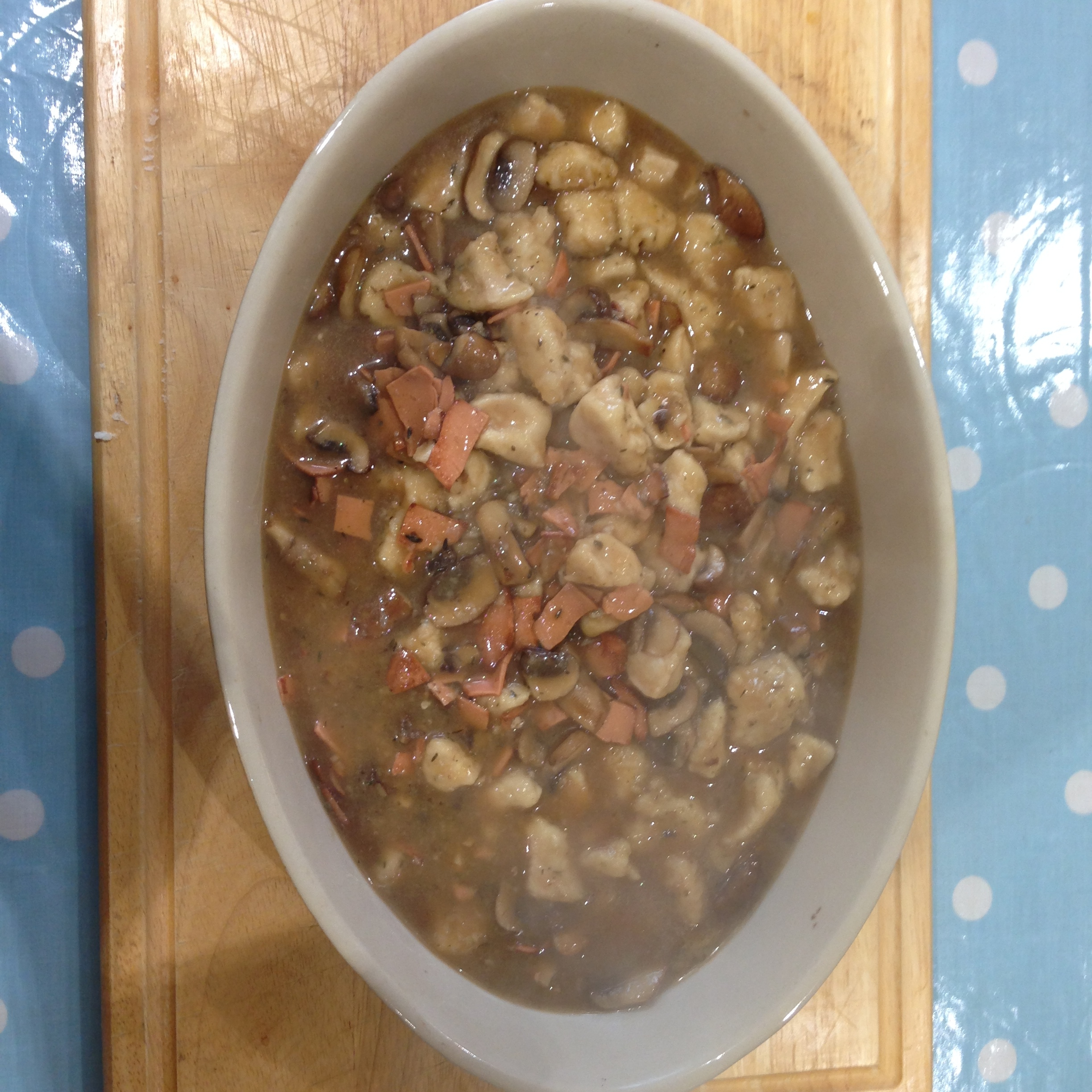
Once the gravy is at a thickness that suits you, pour the mixture into a large oven proof pie dish, ensuring that the contents are evenly mixed. Then layer the mashed potato over the top of the filling, using a fork to create nice tram-line patterns on the top. You should have enough potato for it to be around 0.25-0.5cm depth. The original recipe uses a puff pastry topping and smaller pie dishes, but we prefer the potato version.

Put the pie filling into a large pie dish

Put the pie filling into a large pie dish

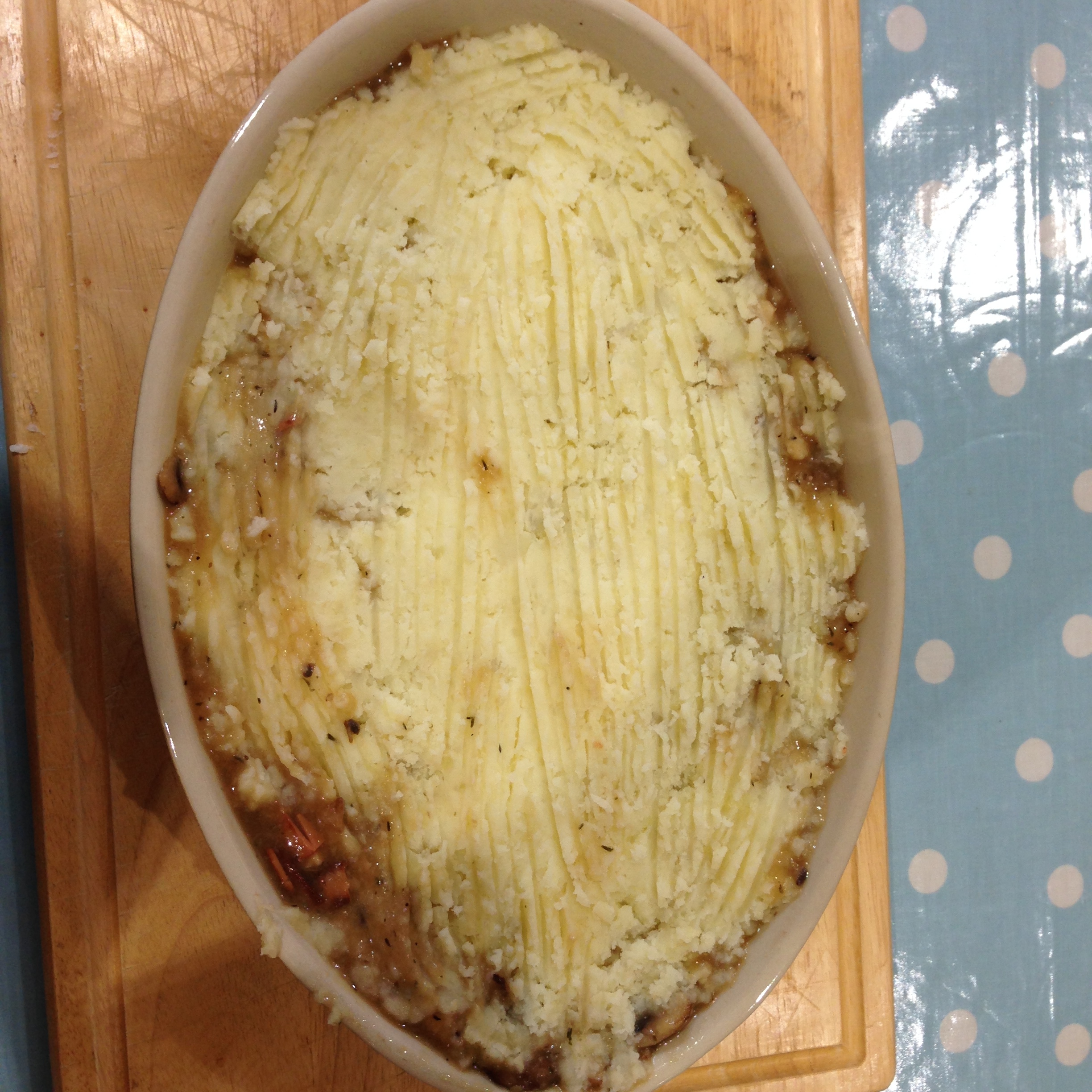
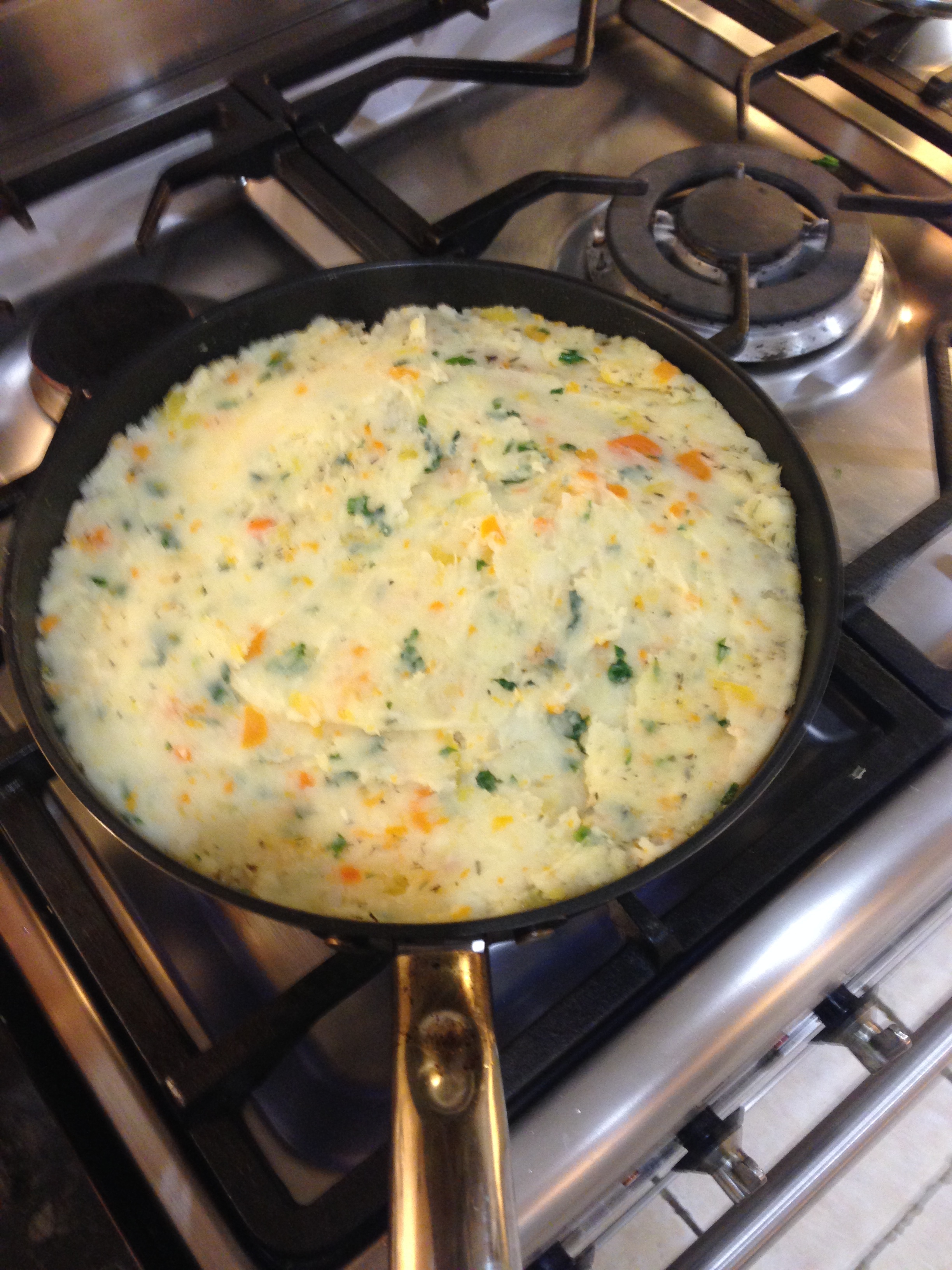
Now place the pie in the oven for 20-30 minutes, or until the gravy is just bubbling up the sides and the potato has just started to go crisp on top.

Add the potato topping and cook until crisp with gravy bubbling through

Add the potato topping and cook until crisp with gravy bubbling through

This dish looks, and smells, impressive when placed in the centre of your table (on a heat proof surface) – then just watch your diners dive in and come back for seconds! Serve with a few vegetables of your choice. This recipe serves three if you are all very hungry, but is good for four particularly if served with a number of side dishes of vegetables.

Why I like this recipe

It is another simple recipe, that produces impressive results

It is a great sharing meal – there’s nothing better than a big pie in the middle of the table for everyone to dive into.

It is a great winter warmer and what we call “comfort food” – it just makes you feel warm and full inside, and tastes delicious.

Any leftovers can be kept in the fridge for a few days and reheated in the microwave (my daughter has been known to have it for breakfast the following morning!).

It can also be easily frozen. I will sometimes make an excess so that we have a serving or two to freeze. If using from frozen, defrost throughly and then cook in the oven at 200C for at least 30 minutes.

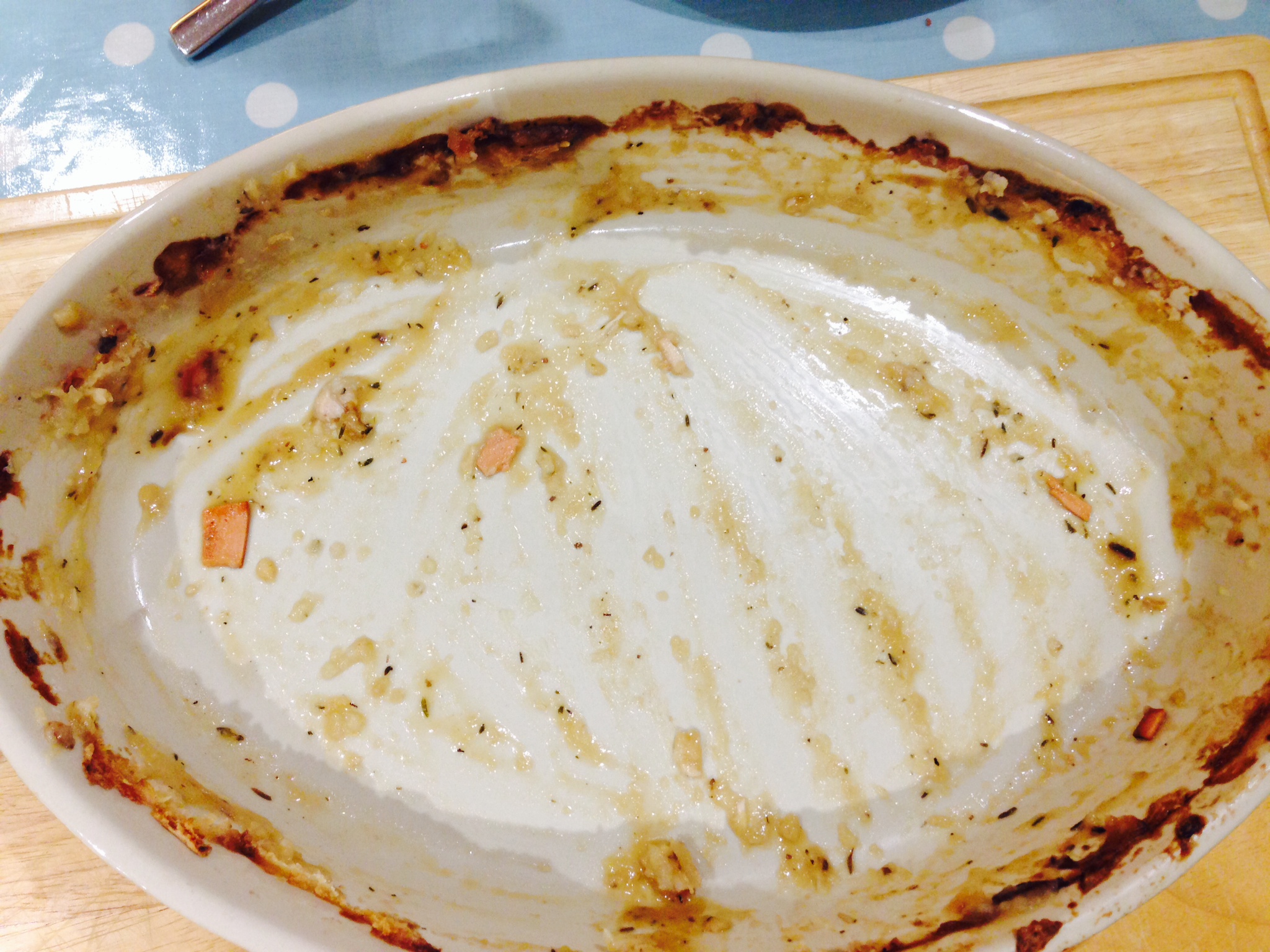
Finally I like this recipe because this is the end result:

All gone!

All gone!

That’s the end of my cooking trilogy, but as so many people seem to have enjoyed these recipes I will do another one in a few months time after I have experimented with a few more creations!

A Cooking Trilogy: Part Two

“Many folk like to know beforehand what is to be set on the table; but those who have laboured to prepare the feast like to keep their secret; for wonder makes the words of praise louder”

(From “Return of the King”, by J.R.R.Tolkein, spoken by Gandalf)

Tempura Prawns with Gluten-free Batter – based on a recipe by Nigella Lawson

If there is one TV cook who I follow more than any other it is Nigella, and a personalised signed copy of “Nigelissima”, from which this recipe is adapted, is a prized possession. I am sure that she would approve of the quote above, and it rings very true with me because it is not just the cooking that I enjoy, it is the pleasure that the food I have prepared brings to others, and (perhaps rather vainly) secretly enjoying their praises, especially if the dish is a surprise. This particular recipe is a favourite of my wife and daughter, and they always make comments along the lines of “you couldn’t get better in a posh restaurant”.

The key to this recipe is making a light and airy batter – which is pretty simple to do. I make mine with a gluten-free rice/potato mix flour, having found that rice flour makes an overly heavy batter. I have also scaled up from the original recipe.

What you need for the batter:

50g of gluten-free flour

2 egg whites

2 teaspoons of olive oil

120mls of warm water (straight from the tap is fine)

What else you need:

Approx. 400g of king prawns (don’t use the small “everyday” prawns, they just don’t hold enough batter to work)

1.5 litres of vegetable oil (I find sunflower oil works well, but I am sure other varieties do too)

Weigh out the flour and then mix in the olive oil. Now slowly add the warm water and begin to whisk (a hand whisk is better for this stage). You will find that the mix gets heavy quite quickly and ends up as a lump in the middle of your whisk, don’t worry, just shake it free, add a little more warm water and it will smoothen out. Keep whisking and adding the water until you have a mixture roughly the consistency of double cream. If you add too much water, just correct by sprinkling in a little extra flour.

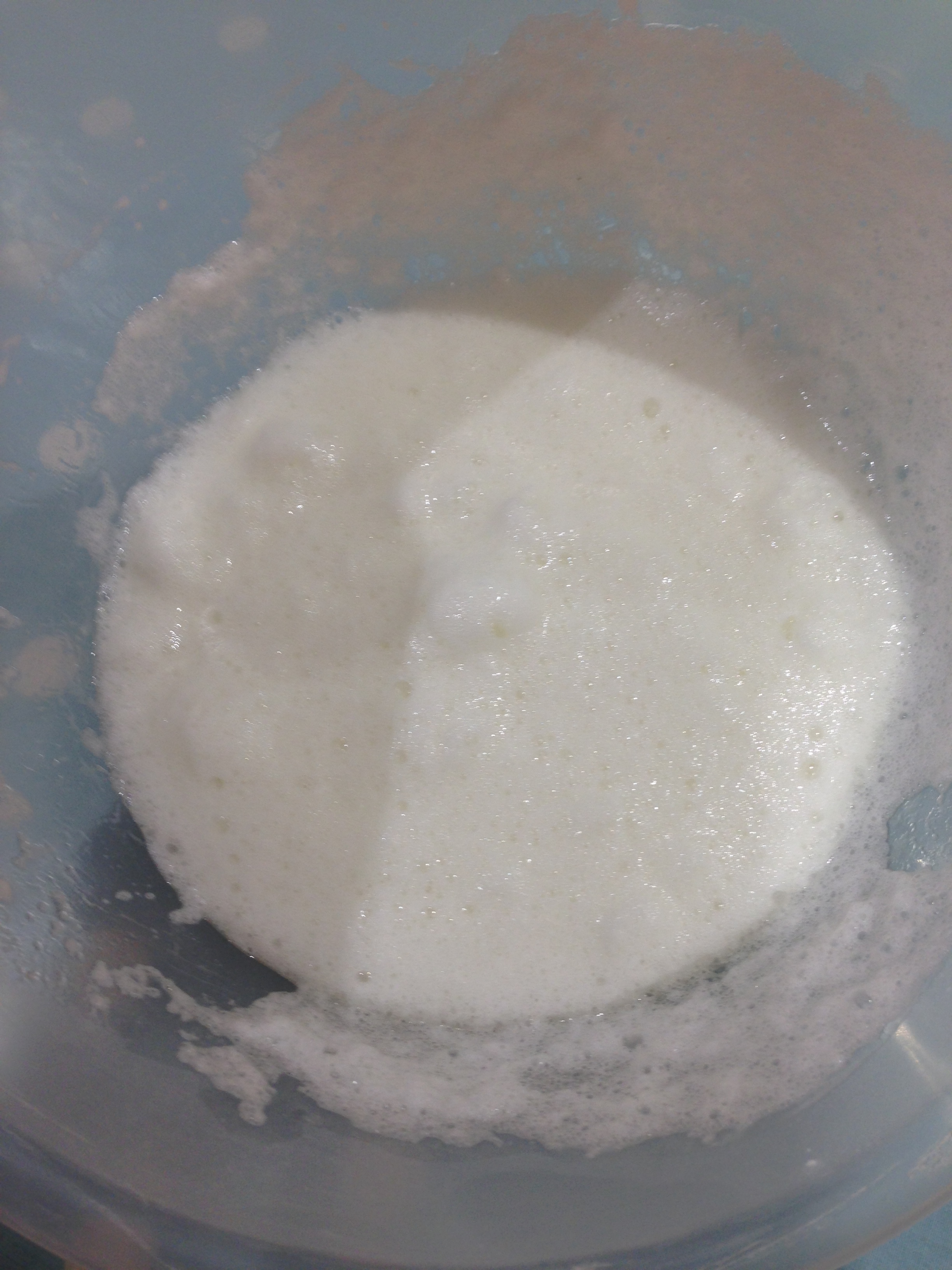
Once you’ve achieved the right consistency, stand the mixture to one side. In a separate bowl whisk 2 egg whites until they form firm peaks that hold. You can easily do this with a hand whisk in a few minutes with just 2 egg whites.

Now fold (don’t mix or whisk) the egg white into the flour mixture, making sure to fold in plenty of air. Once done, place in a fridge for at least 30 minutes.

A light and airy batter is the secret to this dish

A light and airy batter is the secret to this dish


After about 20 minutes I start to get the vegetable oil ready. Pour about 1.5 litres of oil into a large saucepan so that it is about two-thirds full. Place on a high heat, observing all the safety rules for hot oil i.e. no small children in the kitchen, pan handle pointed inwards, cover your arms and wear covered not open shoes – in the unlikely event of an incident hot oil on bare toes is extremely painful! Okay, safety lecture over!

After about 10 minutes the oil should be ready, check this by dropping a teaspoon of the batter mix into the pan – if it sizzles and browns in about 30 seconds, it’s ready. The oil should be reduced to a steady medium heat now to prevent spitting.

Add a few prawns to your batter mix. Make sure they are covered in the mixture, and then place them gently, one by one, in the oil. I use a long-handled teaspoon for this, which works perfectly. The prawns should take only 1-2 minutes to cook, once the batter is a golden brown remove them with a slotted spoon – I place them in a foil covered, kitchen roll lined, dish to keep them warm. Repeat this process until all the prawns are cooked. If you want to be really “cheffy”, take a few slices of lemon, and some sprigs of parsley and coat them in batter and fry as well.

Coat the prawns in batter using a long handle teaspoon

Coat the prawns in batter using a long handle teaspoon

Cook 4 - 5 prawns at a time

Cook 4 – 5 prawns at a time

Remove cooked prawns with a slotted spoon

Remove cooked prawns with a slotted spoon


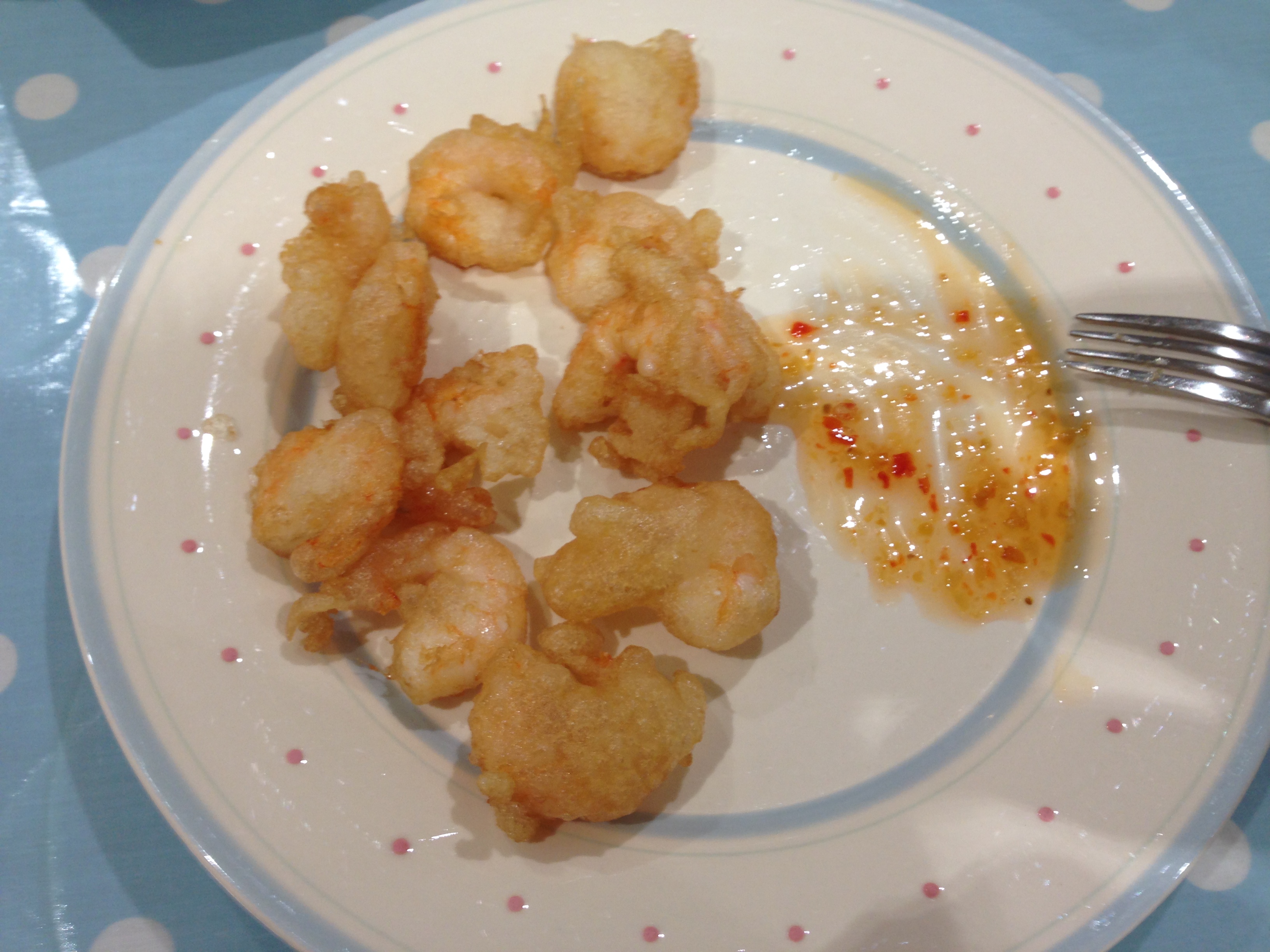
This is a perfect starter, but we like to make it a main meal – the quantities above make a good sized helping for two people. We serve with a little salad and a drizzle of sweet chilli dipping sauce.

Serve with a little sweet chilli dipping sauce

Serve with a little sweet chilli dipping sauce


Why I like this recipe

It’s simple to cook, but the results are impressive.

The diners in our house demolish them in a matter of minutes, and give me lot’s of compliments every time I make them!

It’s a versatile dish as it’s a great starter, really good finger food for a hot buffet, and very filling for a main meal when scaled up.

The batter can be used for coating and deep frying anything – I’ll be experimenting with a few more things in the weeks to come.

As you cook you end up with broken off pieces of batter that you have to take out of the oil, I place these to one side and invoke chef’s privilege and have a nibble while I am cooking!

A Cooking Trilogy: Part One

“ ’Tis an ill cook that cannot lick his own fingers”

(William Shakespeare, from Romeo & Juliet)

I like to cook. And I like to write. So I’ve decided to use my next three posts to combine the two. I will provide a favourite recipe, with my own tips and modifications, a few illustrations and the reasons that I enjoy cooking and eating this particular meal.

I love that quote above from Romeo & Juliet, and although there is some subtext to it, the humour from the servant to Lord Capulet is obvious, he means that he can find more cooks by seeing if they will eat their own food, by licking their fingers during its preparation. This particular meal has me licking my fingers while I am making it:

Bubble & Squeak – Original recipe by Jamie Oliver

Take 1kg of good quality potatoes that will mash well, Maris Pipers are ideal. Peel, cut into smaller pieces to reduce the boiling time, and set aside.

Take 600g of mixed root vegetables, I use a combination of swede, carrots, and parsnips. Peel and chop. If you are using swede boil this for 5 minutes on its own, then add the rest of the chopped vegetables along with the potato. Salt the water if you like, but you’ll add seasoning later so not really necessary.

Once boiled sufficiently, so that the vegetables are soft enough to mash, add a handful of chopped curly kale to the saucepan for about a minute.

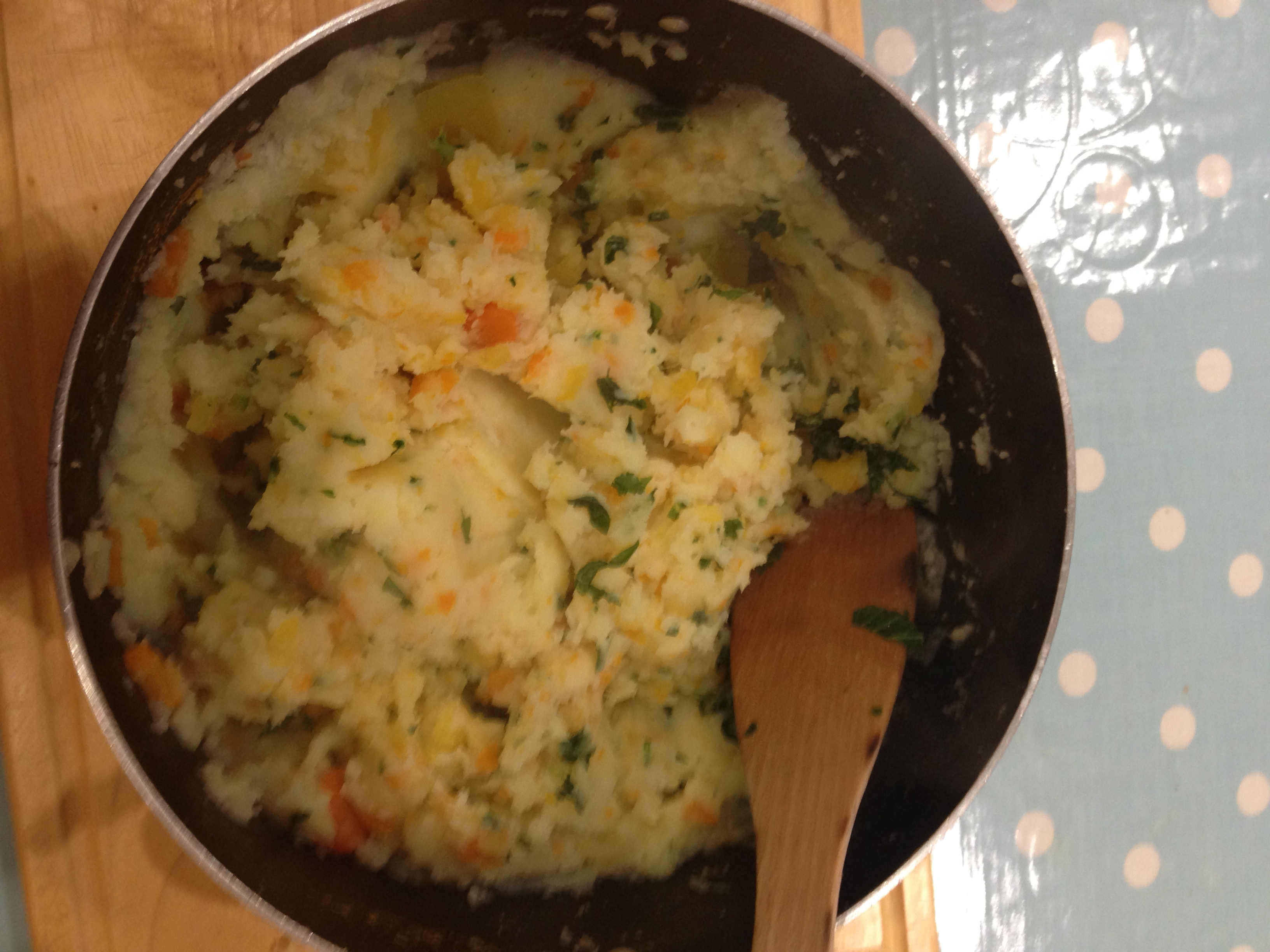
Now drain the vegetables and allow to steam dry for a few minutes, then mash, don’t be afraid of a few lumps as this will add to the texture. In the meantime, chop a handful of herbs; rosemary, sage and thyme are good, but whatever you have lying around will do. Heat two tablespoons of olive oil in a deep frying pan, add a generous knob of butter and when melted fry the herbs for a a minute or so.

Boil the vegetables until "mashable"

Boil the vegetables until “mashable”


Add the mashed vegetables to the frying pan, mix in the herbs and then flatten the vegetables so they fill the pan in a nice smooth “pancake”. Cook on a medium heat, and mix the vegetables every 3-4 minutes for 15 minutes. Add salt and ground pepper occasionally, and taste to get the seasoning balance just right (any little bits that happen to drop out of the pan pick up with your fingers and lick off!). You’ll find that the vegetables begin to catch the heat and brown on the underside – this is good, and adds to the flavour.

Mash the vegetables

Mash the vegetables


After 15 minutes, if you are brave, flip the bubble & squeak like a pancake – I am not brave, so I just invert over another frying pan. At this point the underside should have some nice crispy brown bits, mix these into the bubble & squeak, and repeat the process for a further 15 minutes. Sometimes you might need to add a little more olive oil if the vegetables have absorbed it all.

Flatten and turn in the frying pan

Flatten and turn in the frying pan

Mix and build up the flavours

Mix and build up the flavours


You are then ready to serve. Turn the bubble & squeak out onto a plate, allow your diners to cut their own slice and then crown it with a fried egg, yolk nice and runny. Supply plenty of brown sauce.

Ready to serve

Ready to serve


This is a perfect winter meal, it is hot and filling and tastes delicious. Any leftovers can be frozen, or just kept in the fridge for 2-3 days and eaten cold or heated – to be honest there is never any left to freeze in our house!

Why I like this recipe. 

It is basic, yet it involves some skill in building up the flavours. And the flavour mix is yours to decide. Each one you cook will be slightly different, as you’ll likely use different vegetables, or different amounts of the same ones. You can be quite creative with what you use.

It looks great when served, especially if you’ve got the right amount of brown bits on the surface.

There is something very British about bubble & squeak, this one is not made with leftovers as a traditional one would be, but it still feels quite authentic.

It is a hunger buster. Make one big enough (scales up easily) and a thick slice is very filling.

It is an easy vegetarian recipe, and can even be made vegan (just leave out the butter and the egg)

It is a great meal for sharing, everyone gets to dive in to get their slice.

It can be served as breakfast, lunch or supper – the choice is entirely yours.

Scraping the pan before you wash it up is the cooks privilege, and you get those crispy bits that stuck.

Coming in my next post: Tempura prawns, made gluten free.

Respectful Remembrance

Today, Sunday November 9th, is Remembrance Sunday – the nearest Sunday to November 11th which is Remembrance or Armistice Day itself. In Great Britain in the weeks leading up to the 11th, the majority of the population will wear a red paper poppy. This is a symbol taken from Flanders Fields – the area during the First World War (WW1) where many bloody battles were fought and where poppies grew. The fields were left unmaintained for years after the war before they became a memorial to those who had lost their lives there. The poppy symbol was derived from a poem “In Flanders Fields” written by a Canadian officer – Lieutenant Colonel John McCrae, which begins:

“In Flanders fields the poppies blow

Between the crosses, row on row”

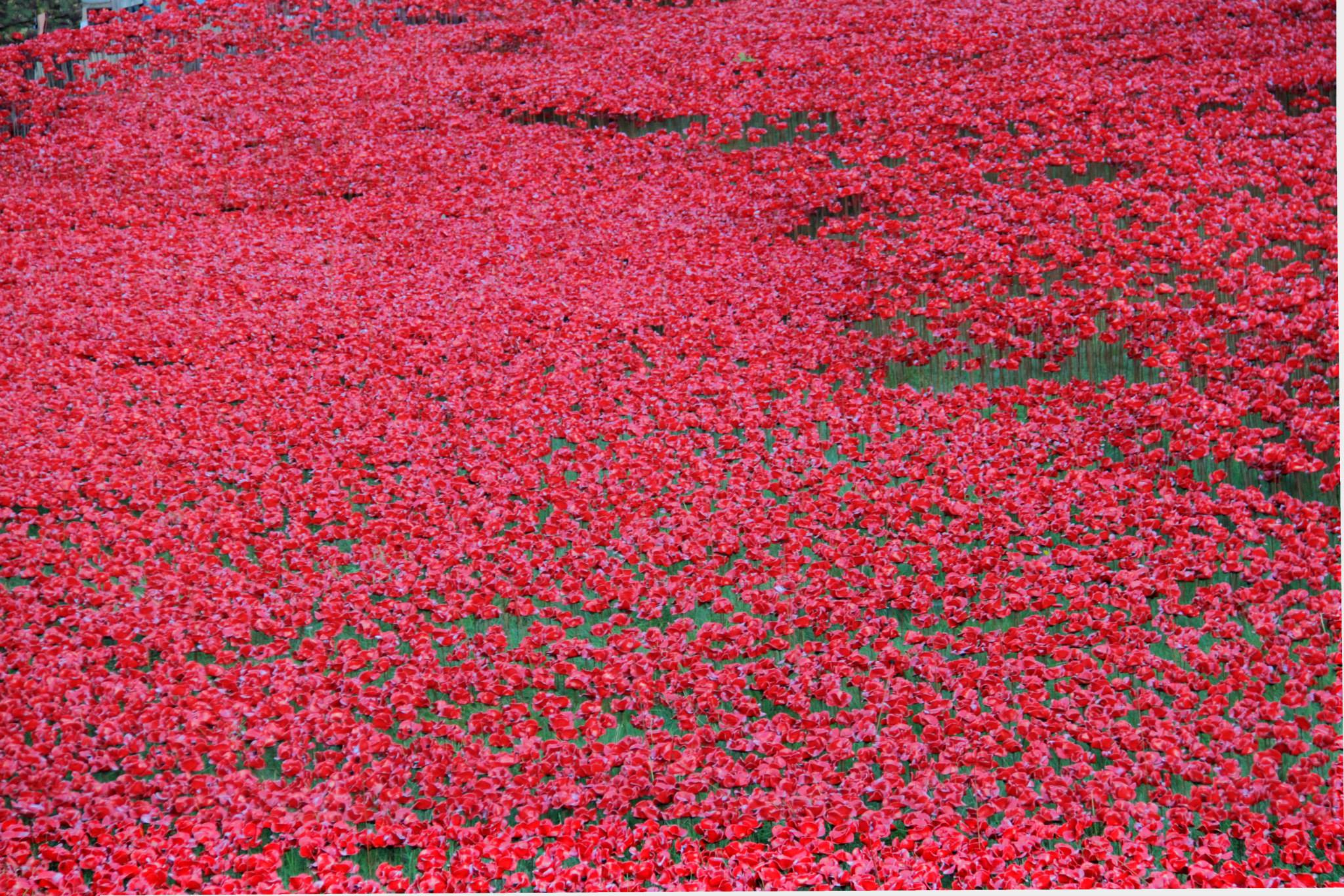
A sea of poppies at The Tower of London

A sea of poppies at The Tower of London


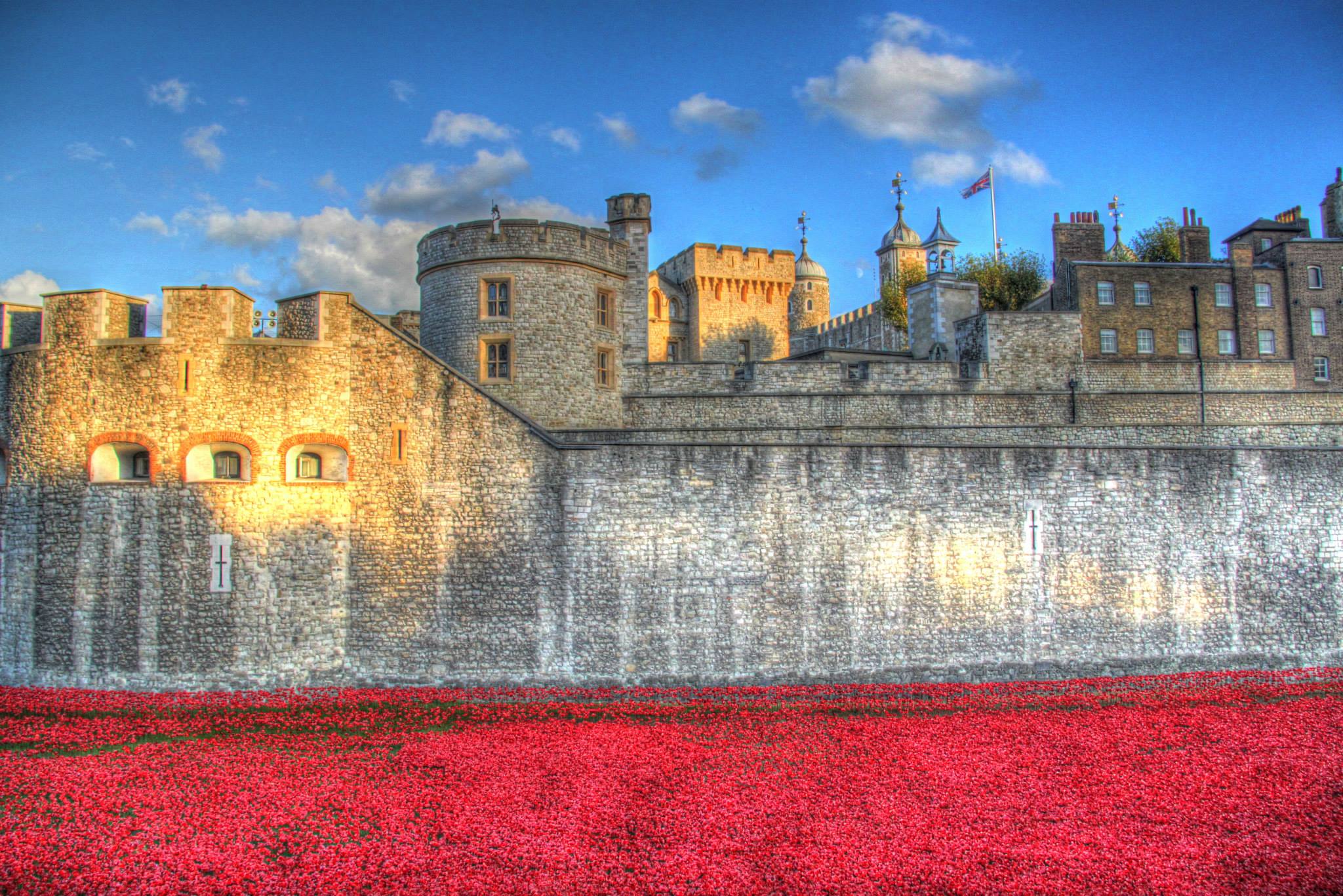
This year is particularly poignant as it marks the 100th anniversary of the outbreak of WW1. To mark that anniversary the ceramic artist Paul Cummins and designer Tom Piper have created a major art installation called “Blood Swept Lands and Seas of Red” at the Tower of London. 888,246 ceramic poppies have progressively filled the Tower’s famous moat since the summer; the final poppy will be “planted” on November 11th. The poppies will then gradually be removed and sent to individuals who have sponsored each one.  Each poppy represents a British military fatality during WW1. The names of many of them have been read out each day.

The poppies have encircled the iconic landmark, creating not only a spectacular display visible from all around the Tower but also a location for personal reflection. The scale of the installation was designed to reflect the magnitude of such an important centenary creating a powerful visual commemoration (source: Historic Royal Palaces).

The British public as well as thousands of tourists have gathered to see this remarkable piece of artwork.

The Tower of London moat filled with remembrance poppies

The Tower of London moat filled with remembrance poppies


But there have been two public discussions that have, in very different ways, distracted from the intent of this artistic act of remembrance. Last week Jonathan Jones, an arts journalist writing for The Guardian newspaper, disrespectfully (in my view) described the poppies as “fake, trite and inward-looking”, he went on to suggest that the “toothless memorial” is overly nationalistic. I’ll deal with some of those objections shortly. Subsequently Boris Johnson, Mayor of London, in a thinly veiled attempt to hijack an act of remembrance to promote tourism, has appealed for the display to be extended beyond the 11th November to allow more people to see it. Other politicians and the tabloid media have also joined this bandwagon. I’ll add more perspective to that too.

What is wrong with both of these very public comments? The article by Jonathan Jones both misjudged the public mood, as well as belittled it, and in an attempt at artistic snobbery his opinions fell spectacularly flat. Jones seems unable to grasp the idea that a memorial can be gracious and dignified whilst still recounting the horrors of WW1, and of all wars since then. Had he taken the time to visit the exhibition inside The Tower, he would have seen the images of war that have fuelled the creation of this piece of living art, he would have heard the voices of those making the poppies who don’t accept an imperfect “second” because each poppy must be perfect as it honours a single person who lost their life. That is hardly trite. Yes, it is nationalistic, and Jones suggested that is a bad thing. What he does not acknowledge is that thousands of overseas visitors will have seen the memorial, will have known what it represents, and have respectfully honoured what it stands for. The remembrance poppy is a national symbol to remind us to remember  all of those who have died in the British forces in all wars, it is our national way of remembering those who fought and died for our freedoms – to that degree it is proudly nationalistic, and always will be.

Boris Johnson on the other hand could perhaps be seen as having his heart in the right place. He has publicly supported the installation, but has now called on the organisers to extend its life beyond 11th November. This too, in my view,  is disrespectful, it puts the promotion of London ahead of the remembrance that is symbolised by the poppies, and seeks to exploit it for further commercial gain. Not to be outdone other political leaders have also added their voices along with a campaign by the right wing newspaper, The Daily Mail, to extend the lifetime of the installation, and even to make it permanent. Even today the Daily Mail has headlines such as “Army top brass salute Mail campaign to keep the Tower poppies blooming”, and in describing this as a “victory” for their campaign they do a major disservice to the memory of those men and women who fought for real victory. These superficial attempts to make popular political capital in the months before a general election are not befitting of the memory of those who died to preserve our freedoms. I find myself hearing the voice of Winston Churchill at these moments, and I have no doubt that he would deride any attempt to politicise such an emotive memorial. The artists, Paul Cummins and Tom Piper clearly agree and have already voiced their opposition to the request, Piper eloquently explains why:

“People have asked why the poppies couldn’t remain there for the whole five years the war lasted, but I think they would lose their impact. For me, it is like a tide that is reaching a full flow. And then it gradually recedes. It should be transient, as were the lives of the people we are celebrating.”

Journalists, art critics, politicians and the media should put aside their daily agenda’s of political and artistic prejudice, and focus on the real meaning of the poppy and of the “Blood Swept Lands and Seas of Red” memorial : To remember the fallen. To honour those who gave their lives for our freedoms and liberty.

We, the people, will always remember them.

The Weeping Willow of poppies at The Tower of London

The Weeping Willow of poppies at The Tower of London


The pictures I include in this blog of the memorial at The Tower of London were taken by my friend Marshall Manson, the copyright remains his, please ask permission via me if you wish to use them. Thank you Marshall.

I’ll try anything Once

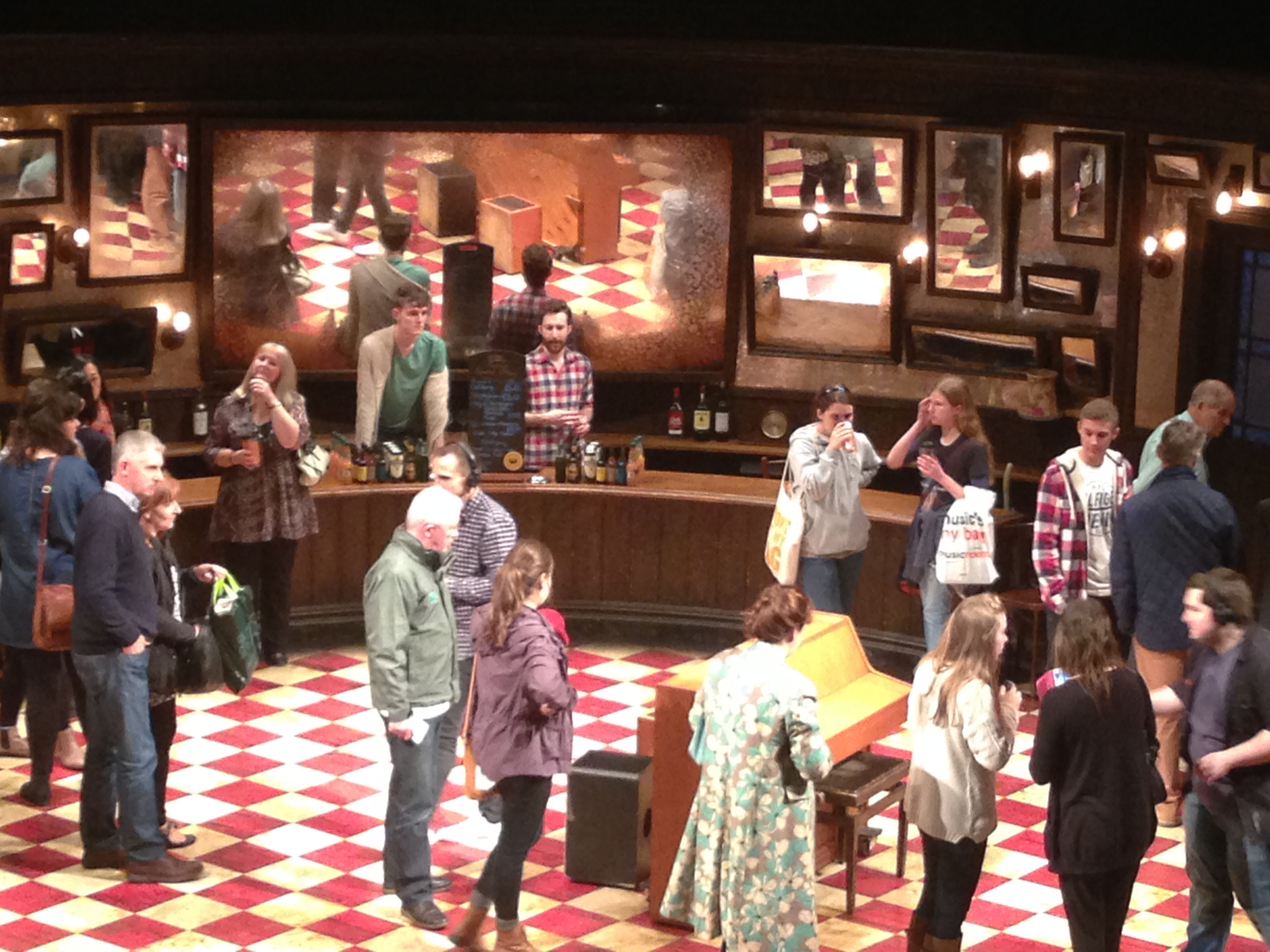
Thursday 30th October 2014. A quick cup of tea in a decidedly dodgy cafe next to The Phoenix theatre, London – a slightly off the beaten track theatre, but on the Charring Cross Road, so still technically “West End”. A three quarters full theatre, despite being half term. What had my daughter and I let ourselves in for I wondered? The musical we were about to see has billed itself as a “revolutionary new musical” – which sounded promising. Something different was certainly going on. As we took our seats the house lights were up, as were the stage lights – no safety curtain in sight. The stage set was a pub bar. It looked convincingly accurate. The stage started to fill with people – yet it was not the scheduled start time. People were chatting on stage, having a drink as the bar, sitting in the seats around the sides, and then someone began to sing, guitars, mandolins and violins began to play – and everyone started having a good time, clapping and tapping their feet to the infectious beat of what I’d probably call Irish folk rock music if I had to give it a label. The audience were allowed onto the stage to mingle with the crew and cast and to even buy a drink at the bar. Different, yes, revolutionary, not really.

As the time approached for the performance to start, the audience were gently ushered off stage, the house lights dimmed slowly and the transition from what was described as a pre-performance hootenanny to the actual performance happened without anyone really noticing. It was as if we were in that pub a moment ago, and now we were observing a scene from a convenient side table.

The stage before the performance begins

The stage before the performance begins

Describing this musical isn’t going to be easy – you’ll have to go and see it to really appreciate it. But broadly it’s appeal and cleverness resides in three main areas, firstly the set itself – it is simple and the set never changes, yet scenes change within it with some clever furniture rearranging and subtle lighting effects. The back of the set is dominated by one large bar mirror, surrounded by many other smaller mirrors arranged haphazardly. The mirrors are what brings each scene to life, as the audience gets an almost 360 degree view of the performance and performers. When instruments are played, we see piano keys reflected when the piano is head on to us, we see the reflected symmetry of the dance routines and snapshots of what the actors are doing throughout the performance which gives you the feeling of both being a little bit of a voyeur, but also of really being there inside that pub as the mirrored images draw you in closer. It’s intimate.

Secondly the music, which is fresh, appealing, with great rhythms and performed with real love – each and every one of the cast could sing, play an instrument with some skill and of course act – I suspect casting was not easy for this musical. Thirdly, the story and the writing itself. The musical is based on the film and is cleverly adapted for stage by Enda Walsh. It is not a complicated story, there are no twists and turns of subplots, there isn’t a long list of characters to keep track of throughout the story. But it is believable. Although it is a story, it isn’t fantasy, this could happen at any time or place in Europe, though based in Dublin it does exude it’s own Irish charm. There are no glib Lloyd-Webber like lyrics and musical “standards”. The music has a raw Irish feel to it, the type of music you want to dance to, the type of music you would dance to in any Irish pub. The same goes for the dialogue, it is earthy and real. There is humour, angst, and love. The story revolves around the main characters ‘Guy’, played by David Hunter (a semi finalist on ITVs “SuperStar in the search for a lead for Jesus Christ Superstar) and ‘Girl’, beautifully played by Jill Winternitz (whose debut was as Baby in Dirty Dancing in the West End) and their love of their music, and their gently growing feelings for each other, though this is no classic love story.

To describe Once as a musical is putting it in the wrong pigeonhole. There is a lot of music, but it doesn’t punctuate the story, because the music is the story, so you are swept along with it. You believe the music, you believe in the soul that is in the music, because it is performed so well and so convincingly. It is hard to believe that what you are watching is acted out several times a week, because it feels so alive and as though the performance is being brought to you for the first time. That possibly stems from the fact that these actor/musicians are simply all in love with music and playing, they are infectiously enthusiastic in their performances and because the entire cast is on stage for most of the performance there is really nowhere to hide – especially with all those mirrors!

I am still not sure I’d class Once as revolutionary, but it was refreshingly different.
As the title of this article says , I will try anything Once – and I would urge anyone to try Once and least once. You’ll come out smiling, singing, maybe jigging – and you’ll almost certainly buy the CD on the way out (avoid the queue and buy it on the way in – you will want it!).

The Limerick Challenge

Fellow blogger Sandra Conner has issued a Limerick challenge to help with her Poetry Writing class.

I thought it might be fun to participate, and while I am doubtful that all my attempts scan as perfectly as they should, here is my contribution:

On the challenge itself:

Limericks are hard to get right
Playing with words late in the night
When you get one on song
It’s not very long
Until the next comes right into sight

For the Europeans who changed to daylight saving at the weekend:

There once was a man who forgot
To reset his digital clock
It was fine for a while
But it made his friends smile
When he was late opening his shop

A couple of silly random ones:

There once was a girl in a field
Wearing shoes much too highly heeled
When she tried to walk through
She lost each fancy shoe
And onto her face she then keeled

There once was a man from France
Who made up a silly dance
It really caught on
And not before long
We all learnt the same strange prance

Take a look at Sandra’s page for more attempts, and follow her instructions to add more if you feel inclined!

http://sandraconner.wordpress.com/2014/10/26/limerick-writing-challenge-102614/